
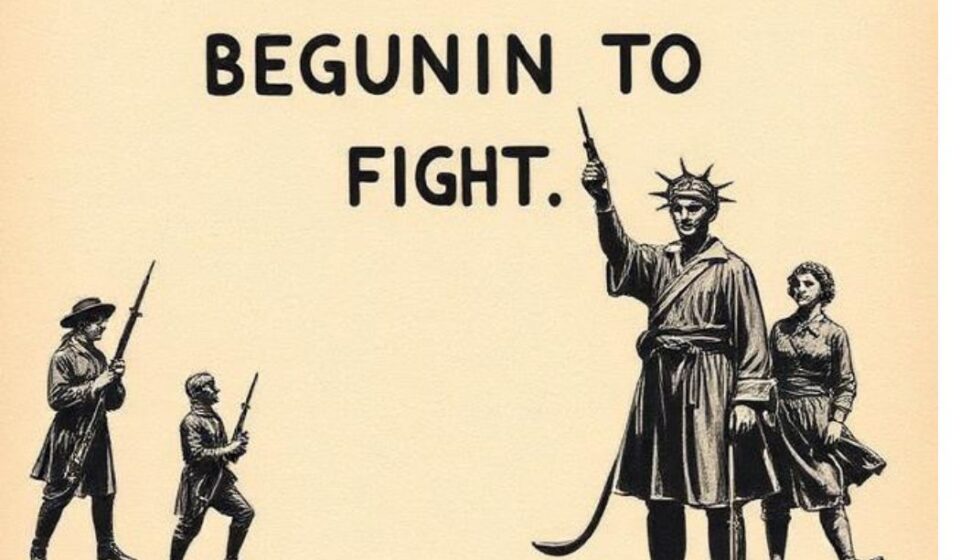

Some words echo through history not because they are poetic, but because they are true.
In the darkest moment of a losing battle, a wounded American commander uttered a phrase that has become the ultimate declaration of refusal to surrender: “I have not yet begun to fight.”
These seven words have inspired military leaders, entrepreneurs, athletes, and anyone facing impossible odds. But the real story behind the quote—involving burning ships, cannonballs, and a legendary act of defiance—is even more powerful than the legend.
Let’s dive into the true story of John Paul Jones, the Battle of Flamborough Head, and why this 18th-century battle cry is still your most powerful modern mindset.
The Man Behind the Words: Who Was John Paul Jones?
Before he became a legend, John Paul Jones was a Scottish-born sailor with a fiery temper and an unmatched skill for naval warfare. By 1779, he was a captain in the Continental Navy—America’s tiny, outmatched fleet fighting the mighty British Royal Navy during the Revolutionary War.
Jones wasn’t just a fighter; he was a strategic fighter. He believed in aggressive action when everyone else preached caution. That philosophy would soon give birth to one of history’s greatest quotes.
The Battle of Flamborough Head: A Scene of Chaos
On September 23, 1779, Jones commanded the Bonhomme Richard, a refitted French merchant ship named after Benjamin Franklin’s Poor Richard’s Almanack. His squadron engaged a British convoy protected by the HMS Serapis, a sleek, heavily armed new warship.
It was a mismatch.
Within an hour, the battle turned into a floating nightmare. The Bonhomme Richard was riddled with holes, taking on water, and on fire. Cannons were exploding on deck. More than half his crew were dead or wounded. The ship was sinking beneath his feet.
Seeing the devastation, the British commander, Captain Richard Pearson, cupped his hands and shouted across the smoke-filled water:
“Has your ship struck her colors?”
In naval tradition, striking the flag meant surrender. It was a reasonable question. Any sane captain would have given up.
John Paul Jones’ response became legend.
The Legendary Reply (Yes, He Really Said It)
According to first-hand accounts, Jones roared back:
“I have not yet begun to fight!”
But here’s where history gets interesting. Some versions claim he actually said, “I may have not yet begun to fight,” while a witness reported a more profane Navy version: “No, I’ll be damned if I strike my colors!”
Regardless of the exact wording, the meaning is what stuck. Jones wasn’t done. He hadn’t even started as far as he was concerned.
And then he did something insane.
Instead of retreating, Jones maneuvered the burning Bonhomme Richard directly alongside the Serapis and lashed the two ships together with grappling hooks. He ordered his men to board the enemy vessel. The battle devolved into hand-to-hand combat across the decks.
Three hours later, the Serapis surrendered. Jones and his crew abandoned the sinking Bonhomme Richard, boarded their captured prize, and sailed away to safety.
Why This Quote Resonates 250 Years Later
You don’t need to be a naval historian to feel the power of those words. “I have not yet begun to fight” works on multiple levels:
1. It Rejects the Victim Mindset
Jones never said, “I’m losing.” He didn’t say, “This is unfair.” He simply stated that the current condition was not the final outcome. That distinction changes everything.
2. It Anchors You to the Future
The word “yet” is the hidden genius. It implies that while things are bad now, the story is still being written. “Yet” turns defeat into a delay.
3. It Signals Unbreakable Resolve
When you declare you haven’t even begun, you tell everyone—your team, your enemy, and yourself—that you have reserves of effort, creativity, and energy you haven’t tapped.
4 Modern Lessons from Jones’ Defiance
You probably won’t be lashed to a burning ship anytime soon. But you will face moments when quitting seems logical. Here is how to apply the Jones mindset today:
Lesson1: Redefine “Fighting”
Jones couldn’t win a traditional cannon duel. So he changed the rules. He grappled and boarded. When your current strategy fails, don’t quit the goal—change the method.
Lesson2: Use “Yet” as Your Secret Weapon
Add the word “yet” to any failure statement:
-
“I haven’t closed this deal… yet.”
-
“My business isn’t profitable… yet.”
-
“I don’t have the skills… yet.”
That single word turns a dead end into a delay.
Lesson3 : Visibility Creates Resolve
Jones didn’t whisper his defiance. He shouted it across the water. Declaring your commitment publicly—to a mentor, a team, or a coach—makes it harder to back down later.
Lesson4: Burn the Ships (Metaphorically)
Lashing his sinking ship to the enemy vessel was a point of no return. Sometimes, you need to create a situation where surrender isn’t an option. Set deadlines, make commitments, and remove safety nets.
Common Misconceptions About the Quote
Let’s clear up a few myths:
| Myth | Truth |
|---|---|
| Jones said this from a position of strength. | He said it from a sinking, burning ship with heavy casualties. |
| He won easily after saying it. | He fought for three more hours and lost his own ship in the process. |
| The quote was written down immediately. | It appeared in memoirs years later, leading to slight variations. |
The exact wording may be debated, but the spirit is undeniable. And spirit is what matters.
How to Use This Quote in Your Daily Life
Words are useless without action. Here are three practical ways to embody “I have not yet begun to fight” starting today:
-
The 5-Minute Rule: When you feel like quitting a difficult task, tell yourself, “I haven’t really tried yet.” Give it five more minutes of focused effort. You’ll be shocked how often the breakthrough comes.
-
The Resource Audit: Before you give up on a goal, write down three resources you haven’t used yet (a contact, a skill, a tool, extra time, etc.). Jones didn’t have a better ship—he had creativity.
-
The Affirmation: Write the quote on a sticky note and place it where you see it during hard moments. A simple visual reminder reprograms your automatic response to stress.
Final Thought: The Ship Sinks, But the Legacy Stands
Here is the beautiful irony of John Paul Jones’ most famous moment: He lost the Bonhomme Richard. The ship sank beneath the waves less than 24 hours after the battle ended.
But no one remembers the ship’s sinking. We remember the man who refused to quit.
That is the power of “I have not yet begun to fight.” It’s not about avoiding failure or loss. It’s about refusing to let failure write the final sentence of your story.
So the next time you’re down, outnumbered, and on fire—metaphorically or literally—remember the Scottish captain in a dying ship. Take a deep breath. And whisper to yourself:
“I have not yet begun to fight.”
Then prove it.