
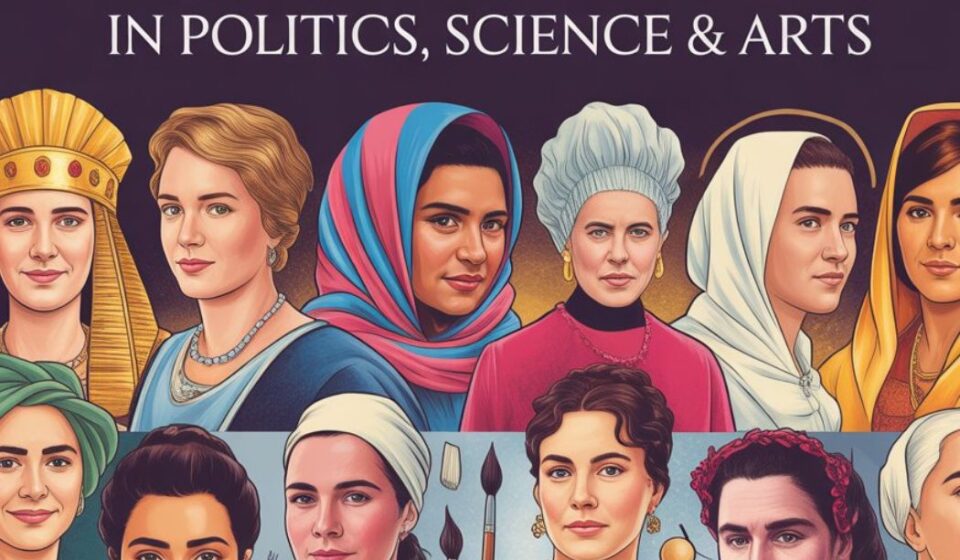

When we talk about famous females, we aren’t just listing names from a history book. We are celebrating architects of change, voices for the voiceless, and pioneers who shattered glass ceilings. While male-dominated narratives often take center stage, women have quietly (and loudly) steered the course of human civilization.
This article highlights the most influential women across different eras—from ancient rulers to modern activists. Whether you are looking for inspiration or historical context, these famous females represent resilience, intelligence, and unparalleled courage.
Why Celebrating Famous Females Matters
Before diving into the list, it is crucial to understand why recognition matters. According to UNESCO, only 27% of historical figures mentioned in textbooks are women. By amplifying these stories, we:
-
Inspire the next generation of female leaders.
-
Correct historical biases in education.
-
Provide diverse role models in STEM, politics, and the arts.
Now, let’s explore the icons who changed everything.
1. Politics & Leadership: Rulers Who Reshaped Nations
Cleopatra VII (69–30 BCE)
The last active ruler of the Ptolemaic Kingdom of Egypt, Cleopatra was more than a beauty icon—she was a brilliant strategist and polyglot. She forged critical alliances with Rome, delaying Egypt’s absorption into the empire for nearly two decades.
Queen Elizabeth I (1533–1603)
Known as the “Virgin Queen,” Elizabeth I led England through its “Golden Age.” She defeated the Spanish Armada, fostered the English Renaissance, and established Protestantism as the nation’s religion without major civil war.
Indira Gandhi (1917–1984)
As India’s first and only female Prime Minister, Gandhi led the country through the Bangladesh Liberation War and promoted agricultural modernization (the Green Revolution). Her leadership remains a benchmark for women in South Asian politics.
Jacinda Ardern (b. 1980)
The former Prime Minister of New Zealand redefined empathetic leadership. Her rapid response to the Christchurch mosque shootings (2019) and COVID-19 pandemic earned global praise. She proves that kindness and strength are not mutually exclusive.
2. Science & Innovation: Groundbreakers in STEM
Marie Curie (1867–1934)
The first person (and only woman) to win Nobel Prizes in two scientific fields—Physics and Chemistry. Her research on radioactivity not only advanced medicine (X-rays, cancer treatments) but also changed physics forever.
Rosalind Franklin (1920–1958)
Often overlooked, Franklin’s X-ray diffraction images of DNA were critical to discovering the double helix structure. Though Watson and Crick won the Nobel, history now rightly credits her contribution.
Katherine Johnson (1918–2020)
A NASA mathematician whose orbital calculations made the first American crewed spaceflight (Mercury-Atlas 6) and Apollo 11 moon landing possible. Her story was immortalized in the film Hidden Figures.
Dr. Kizzmekia Corbett (b. 1986)
A viral immunologist at NIH, Corbett led the team that developed the Moderna COVID-19 vaccine—in record time. She is a leading voice for vaccine equity and racial diversity in science.
3. Arts & Literature: Voices That Echo Through Time
Frida Kahlo (1907–1954)
The Mexican painter turned her physical pain into surrealist masterpieces. Her self-portraits explore identity, postcolonialism, and the female form, making her a feminist icon decades after her death.
Maya Angelou (1928–2014)
A poet, memoirist, and civil rights activist. Her first autobiography, I Know Why the Caged Bird Sings, was one of the first bestsellers to openly discuss racism, trauma, and womanhood. She recited her poem “On the Pulse of Morning” at President Clinton’s 1993 inauguration.
Jane Austen (1775–1817)
Though her novels Pride and Prejudice and Sense and Sensibility seem romantic on the surface, Austen was a sharp social critic. She exposed the economic precariousness of women in 18th-century England, influencing literary realism.
4. Activism & Human Rights: Warriors for Justice
Malala Yousafzai (b. 1997)
At 15, she survived a Taliban assassination attempt for advocating girls’ education. At 17, she became the youngest Nobel Peace Prize laureate. Her Malala Fund has educated thousands of girls in developing nations.
Rosa Parks (1913–2005)
By refusing to give up her bus seat in segregated Montgomery, Alabama, Parks ignited the 1955–56 Montgomery Bus Boycott. Her quiet act of defiance became the spark for the American Civil Rights Movement.
Emmeline Pankhurst (1858–1928)
The British leader of the suffragette movement, Pankhurst founded the Women’s Social and Political Union (WSPU). Her militant tactics—hunger strikes and demonstrations—forced Britain to grant women the vote in 1928.
Greta Thunberg (b. 2003)
Starting with a solo school strike in 2018, Thunberg built a global youth climate movement. Her blunt speeches to world leaders (“How dare you?”) have made her the most influential environmental activist of her generation.
5. Modern Icons: Today’s Famous Females
| Name | Field | Why She’s Famous |
|---|---|---|
| Taylor Swift | Music | Broke record for most Album of the Year wins (4) at Grammys; re-recorded her masters to fight artist rights. |
| Serena Williams | Sports | 23 Grand Slam singles titles—most by any player in the Open Era; advocate for maternal health and pay equity. |
| Oprah Winfrey | Media | From poverty to first Black female billionaire; her talk show ran 25 seasons and launched countless careers. |
| Kamala Harris | Politics | First female, first Black, and first South Asian Vice President of the United States. |
The Common Thread: Resilience and Vision
What links a 1st-century Egyptian pharaoh to a 21st-century climate activist? Unwavering vision. Despite systemic barriers—lack of education, legal inequality, and social exclusion—these famous females saw what could be, not just what was.
Statistics back this up: According to a 2023 Pew Research study, 78% of young women say female historical figures have directly influenced their career choices. Representation is not symbolic; it is actionable.
How to Learn More About Famous Females
If you want to dive deeper:
-
Books: A Room of One’s Own by Virginia Woolf, Women in Science by Rachel Ignotofsky.
-
Podcasts: The History Chicks, Stuff Mom Never Told You.
-
Documentaries: RBG (about Ruth Bader Ginsburg), Won’t You Be My Neighbor? (featuring female activists).
-
Museums: The National Museum of Women in the Arts (Washington, D.C.) – virtual tours available.
Conclusion: Your Turn to Be Inspired
The stories of famous females are not just trophies to observe—they are roadmaps for action. Whether you are a student, a professional, or a parent, ask yourself: What barrier can I break today? Because the next generation of famous females is being shaped right now, in classrooms, labs, and living rooms.
Call to Action (CTA):
Who is your favorite famous female? Drop her name in the comments below—and tell us why she inspires you. Don’t forget to share this post with a young woman who needs to see these role models.