
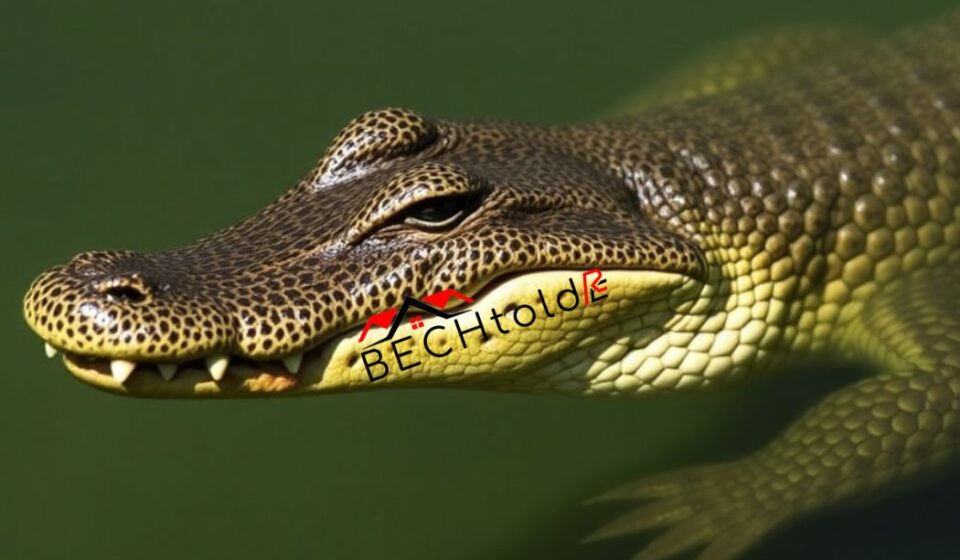

When you hear whispers of “Crocolini,” it sounds like something straight out of a sci-fi movie—a secret government experiment or a cryptid lurking in the sewers. The name itself feels like a mashup of Crocodile, Alligator, and maybe Caiman.
But is the Crocolini real? Is it a hybrid super-predator?
While the term “Crocolini” isn’t the official scientific name for an animal (it is largely a colloquial or speculative term), it points to one of the most intriguing questions in herpetology: Can different species of these ancient reptiles interbreed?
After digging through the latest genetic studies and historical oddities, the answer is a fascinating yes, but with massive limitations.
Here is the ultimate guide to the science, the scandals, and the surprising truth behind the “Crocolini.”
1. Defining the “Crocolini” Dream
Before we go any further, let’s clarify the players. The order Crocodylia includes alligators, crocodiles, caimans, and gharials.
If we imagine a “Crocolini,” we are usually talking about a hybrid between two distinct species within this order—for example, a Crocodile + Caiman, or an Alligator + Crocodile.
The Hard Truth: While nature loves to blur lines, there are strict genetic walls between these families that have been built over tens of millions of years.
2. The Great Wall of Crocodilia: Why Gators and Crocs Can’t Mix
Let’s tackle the most common question first: Can a crocodile and an alligator mate?
The short answer is No.
Despite looking similar to the untrained eye, American Alligators and American Crocodiles are separated by roughly 90 million years of evolution . To put that in perspective, dinosaurs were still roaming the earth when these two lineages split.
-
The Family Feud: Alligators belong to the family Alligatoridae, while true crocodiles belong to Crocodylidae .
-
Genetic Incompatibility: Their DNA has drifted too far apart. Even if mating occurred (which is highly unlikely due to different mating rituals and seasons), the sperm and egg would not align to create an embryo .
-
The “Liger” Effect: Unlike lions and tigers (which are relatively closely related), alligators and crocodiles are simply too distant. There are no “Crocogators” in the wild or in captivity.
3. The Real “Crocolini”: Caiman + Crocodile Success
Just because the big two (Alligator & Crocodile) can’t mix doesn’t mean hybridization is impossible. This is where the term Crocolini gets interesting.
If you see a hybrid in a zoo or the wild, it almost always involves Caimans and Crocodiles.
The Cuban Connection
The most famous evidence comes from Cuba. Scientists have discovered that American Crocodiles (Crocodylus acutus) living in Cuba have been interbreeding with the critically endangered Cuban Crocodiles (Crocodylus rhombifer) . This is happening because their habitats overlap.
The Smiley Case
Perhaps the most famous “Crocolini” in history is Smiley, a nine-foot-long female living at the Cayman Turtle Farm. Geneticists and keepers identified Smiley as an American/Cuban croc hybrid . She is a living, breathing example that these two distinct croc species can produce viable offspring.
The Caiman Connection
Research published in the Journal of Zoology (2025) confirms that Broad-snouted Caimans and Yacare Caimans are hybridizing in South America . These two species diverged about 26 million years ago, yet they are still capable of producing hybrid offspring where their territories cross .
4. The “Pizzly Bear” Effect: Why Hybrids Happen
Why would a crocodile want to mate with a caiman? Usually, it is a last resort.
Hybridization often occurs when one species is endangered and cannot find a mate of its own kind. For example, the rare Cuban Crocodile is so outnumbered by the American Crocodile that they sometimes pair up out of necessity .
This is a conservation nightmare. While creating a “Crocolini” is cool, it leads to genetic swamping—where the purebred Cuban Crocodile genes slowly disappear, eaten up by the hybrid population.
5. The “Caiman Lizard” Confusion
If you search for “Crocolini” online, you might stumble across photos of stunning green lizards with red heads.
That is NOT a hybrid.
That is the Caiman Lizard (Dracaena guianensis) . It gets its name because its scales look like the bony skin of a caiman, but it is actually a lizard (a cousin of the tegu) . It is a pure species, not a crossbreed. Don’t let the internet trick you!
6. The Fruit-Eating Plot Twist
If you are raising a “Crocolini” (or any crocodilian), you need to know this: They don’t just eat meat.
Recent research has shattered the myth that crocodilians are strict carnivores. Scientists have discovered that many species, including caimans, intentionally eat fruit .
-
Seed Dispersal: Crocodilians swallow fruit whole. They then travel miles away and poop out the seeds, essentially acting as giant, scary gardeners .
-
The “Alligator Pear”: The Avocado (Persea americana) is literally named “alligator pear” because of its historical link to these reptiles .
So, if you dream of owning a Crocolini, be prepared to offer a balanced diet of fish, crustaceans… and perhaps an occasional fig.
Final Verdict: Is the Crocolini Real?
Yes, but not in the way you think.
-
Myth: A massive hybrid between an Alligator and a Saltwater Croc.
-
Reality: Hybrids are usually closely related species, like the American Croc + Cuban Croc, or Caimans + other Caimans.
The “Crocolini” serves as a fascinating gateway into evolutionary biology. It reminds us that while nature loves variety, the rules of genetics are hard to break. And honestly, the purebred species we have—from the tiny Cuvier’s Dwarf Caiman to the massive Black Caiman—are already incredible enough without needing to be a sci-fi hybrid.
Crocolini FAQs: Detailed Answers to Your Burning Questions
1. Can a crocodile and an alligator actually mate?
No, they cannot produce offspring.
While both belong to the order Crocodylia, they are separated by the family level: Alligators are Alligatoridae, crocodiles are Crocodylidae. Their genetic divergence occurred roughly 90 million years ago during the Late Cretaceous period. For perspective, Tyrannosaurus rex did not exist yet.
Even if a male crocodile attempted to mate with a female alligator (or vice versa), several barriers exist:
-
Chromosomal mismatch: Their DNA sequences have drifted too far to form a viable zygote.
-
Behavioral isolation: Crocodiles use vibrating, low-frequency “bellowing” during courtship; alligators use different head-slapping and snout-rubbing rituals.
-
Habitat preference: Crocodiles prefer brackish or saltwater estuaries; alligators prefer freshwater swamps and lakes. They rarely coexist long enough to attempt mating.
No verified hybrid (often called a “Crocogator” online) has ever been documented in the wild or in captivity.
2. What is the most common real crocodilian hybrid?
The most documented hybrid is between the American Crocodile (Crocodylus acutus) and the Cuban Crocodile (Crocodylus rhombifer).
These two species overlap naturally in a small region of Cuba, particularly within the Zapata Swamp. Because the Cuban Crocodile is critically endangered (fewer than 4,000 individuals remain), lone individuals will sometimes mate with the more abundant American Crocodile out of necessity.
The most famous verified hybrid is “Smiley,” a female housed at the Cayman Turtle Farm. Genetic testing confirmed she carries DNA from both species. These hybrids are fertile (can reproduce further), which is a serious conservation problem because it dilutes the already-rare pure Cuban Crocodile gene pool.
3. Can a caiman breed with a crocodile?
Generally no, but it is theoretically possible only if they are very closely related.
Caimans belong to the subfamily Caimaninae (within Alligatoridae), while true crocodiles are in Crocodylidae. The evolutionary split between these two groups happened around 65–80 million years ago.
No verified caiman-crocodile hybrid exists in scientific literature. However, there are unconfirmed reports from captive facilities where a Broad-snouted Caiman (Caiman latirostris) and a Spectacled Caiman (Caiman crocodilus) have hybridized with each other — but those are two caiman species, not a caiman with a true crocodile.
To date: Caiman + True Crocodile = No viable offspring.
4. What is a “Caiman Lizard” and is it related to crocodilians?
The Caiman Lizard is NOT a crocodilian hybrid.
The Caiman Lizard (Dracaena guianensis) is a species of lizard belonging to the family Teiidae (the same family as tegus). It is a pure, naturally evolved species found in the Amazon Basin.
Why the name? It has large, bony, raised scales on its back that resemble the dermal armor (osteoderms) of a caiman. It also has a powerful jaw and a semi-aquatic lifestyle, superficially mimicking small caimans. But genetically, it is far closer to a tegu than to any crocodilian.
These lizards are also specialized snail-eaters — they use their blunt back teeth to crush apple snail shells, something no true crocodilian does.
5. Do crocodilians eat fruit? Is that true?
Yes, and this discovery is less than a decade old.
For centuries, scientists assumed crocodilians (alligators, caimans, crocodiles) were strict carnivores. However, a landmark 2013–2023 review of stomach contents and field observations revealed that over a dozen crocodilian species intentionally consume fruit.
Examples include:
-
American Alligators eating wild grapes, elderberries, and persimmons.
-
Spectacled Caimans consuming figs and palm fruits.
-
Morelet’s Crocodiles swallowing whole seeds from riparian trees.
They do not digest the fruit for sugar energy as much as they swallow it incidentally while hunting prey near fruiting trees. However, the seeds pass through their digestive tract intact and are deposited miles away in their feces. This makes crocodilians legitimate seed dispersers — essentially, giant scary gardeners.
6. Are “Crocolini” dangerous to humans?
That depends entirely on which species is involved.
A hybrid between an American Crocodile (known to attack humans) and a Cuban Crocodile (highly aggressive and agile on land) could theoretically be more dangerous than either parent. Cuban Crocodiles are considered the most aggressive of all New World crocodilians, known to chase humans.
However, no wild “Crocolini” population has been studied for human aggression. Most hybrids exist in captivity or in isolated Cuban swamps. As a general rule: treat any large crocodilian hybrid with extreme caution — assume it inherits the worst traits of both parents.
7. Why can’t we just create a “super crocodile” hybrid in a lab?
Ethical and biological reasons prevent this.
Biologically, even closely related crocodilian species require very specific temperature-dependent sex determination (TSD) and incubation conditions. Lab attempts to hybridize distant species usually result in:
-
Failed fertilization (eggs never develop).
-
Non-viable embryos (hatchlings with heart defects or missing organs).
-
Fertile but deformed offspring (jaw malformations, spinal kinks).
Ethically, conservationists strongly oppose hybridization because it erases pure genetic lineages. The Cuban Crocodile is already endangered; creating hybrids only speeds its extinction through genetic swamping. Most zoos now refuse to breed hybrids for this reason.
8. What is “genetic swamping” and why does it matter?
Genetic swamping is the slow disappearance of a pure species through interbreeding.
Imagine you have 1,000 pure Cuban Crocodiles and 10,000 American Crocodiles. If 10% of Cuban Crocodiles mate with Americans each generation, within 50 years, almost no pure Cuban Crocodile genes remain. The hybrid population becomes a genetic “blend” that no longer represents either original species.
This matters because:
-
Unique adaptations are lost (Cuban Crocodiles have unusual leg joints for terrestrial hunting; hybrids lose this).
-
Conservation laws protect species, not hybrids (hybrids often receive no legal protection).
-
You cannot “unmix” genes once they are combined.
9. Can a human safely keep a Crocolini as a pet?
Absolutely not. This is extremely dangerous and illegal in most countries.
Even a small hybrid (e.g., a Dwarf Caiman crossed with a Spectacled Caiman) will grow to at least 4–5 feet (1.2–1.5 m) and possess:
-
A bite force exceeding 1,000 PSI.
-
Natural predatory instincts (they see small pets and children as prey).
-
No capacity for domestication (they cannot be “tamed” like a dog).
In the US, the Lacey Act prohibits interstate transport of injurious species. Most states ban private ownership of any crocodilian without a zoo license. In the EU, CITES regulations strictly control all crocodilian hybrids. Attempting to keep one will likely result in legal fines, confiscation of the animal, and serious injury.
10. How can you tell a hybrid crocodilian from a pure species?
You generally cannot without a genetic test.
Hybrids often display intermediate physical traits, but these are unreliable:
-
Snout shape: Cuban Crocodiles have a relatively short, rough snout; American Crocodiles have a long, slender snout. Hybrids fall somewhere in between.
-
Scute patterns: The bony ridges on the back (scutes) may show a mix of both species’ arrangements.
-
Scale coloration: Cuban Crocodiles have bright yellow/black speckling; Americans are olive-brown. Hybrids can look like either.
The only definitive method is DNA analysis (microsatellite markers or mitochondrial sequencing). If you see a crocodilian in a zoo labeled “Cuban/American hybrid,” trust that they have done the genetic work.
11. Do crocodilian hybrids exist in the wild outside of Cuba?
Yes, but rarely.
Documented wild hybrids include:
-
Cuba: American × Cuban Crocodile (most common).
-
South America: Broad-snouted Caiman × Yacare Caiman (where their ranges overlap in Brazil, Paraguay, and Argentina).
-
Southeast Asia: Possible Siamese × Saltwater Crocodile hybrids in Vietnam and Thailand (due to captive releases mixing with wild populations).
In Africa and Australia, no verified wild hybrids have been found, largely because crocodilian species there have well-separated habitats and mating seasons.
12. What should I do if I see a crocodilian that looks like a hybrid?
Report it to local wildlife authorities, not social media.
If you are in the US (Florida, Texas, Louisiana), contact your state’s Fish and Wildlife Conservation Commission (FWC) or the USDA Wildlife Services. Do not approach the animal — hybrids are unpredictable.
If you are in Cuba or Central/South America, notify the nearest national park office or university herpetology department. Researchers may want to collect a tissue sample (via a harmless tail snip) for genetic analysis.
Do not post the location publicly on Facebook or Reddit. Unscrupulous reptile collectors have been known to illegally capture and remove rare hybrids for the black market pet trade.