
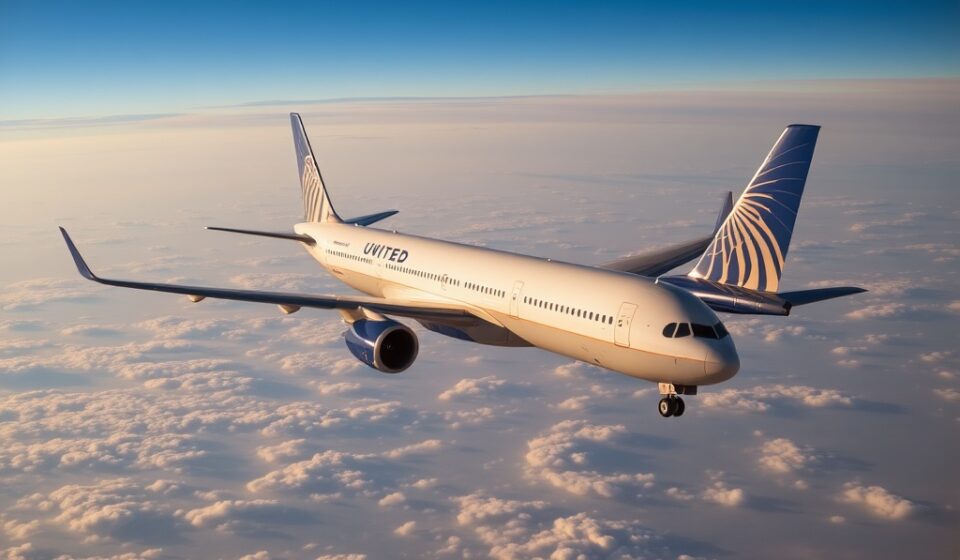

Air travel is a marvel of modern engineering, but even the most routine journeys can take unexpected turns. On August 24, 2025, passengers aboard United Flight UA967 from Naples, Italy, to Newark, New Jersey, experienced a significant disruption that would add over ten hours to their travel time. The flight became the subject of widespread online searches when it was diverted mid-Atlantic to an airport few had planned to visit.
In this article, we break down exactly what happened, why the crew made the decision to divert, and what it means for passenger safety.
The Quick Facts: United Flight UA967
Before diving into the details, here is a snapshot of the flight and the incident:
| Flight Detail | Information |
|---|---|
| Flight Number | UA967 |
| Route | Naples International Airport (NAP) to Newark Liberty International Airport (EWR) |
| Aircraft | Boeing 767-300ER |
| Date | August 24, 2025 |
| Issue | Technical alert / Burning odor in the cabin |
| Diversion Airport | St. John’s International Airport (YYT), Newfoundland, Canada |
| Outcome | Safe landing; passengers transferred to a replacement aircraft |
| Total Delay | Approximately 10+ hours |
Why Was United Flight UA967 Diverted?
Initially, rumors swirled online suggesting that bad weather forced the plane to turn around. However, United Airlines confirmed that the diversion was due to a technical issue, not weather.
Approximately seven hours into the transatlantic journey, the cockpit crew detected a burning odor accompanied by a system alert related to the aircraft’s forward equipment exhaust fan. While this might sound like a minor component, in aviation, any alert concerning the environmental control system (which regulates ventilation and temperature) is treated with the utmost seriousness.
The crew followed standard safety protocols:
-
Assessment: The pilots identified the alert and noted the unusual smell.
-
Consultation: They contacted United Airlines operations and air traffic control to evaluate the situation.
-
Decision: Rather than continuing over the ocean toward Newark with a potential system malfunction, they chose the safest option: landing at the nearest suitable airport.
Where Did the Flight Land?
The Boeing 767-300ER touched down safely at St. John’s International Airport (YYT) in Newfoundland, Canada, at approximately 8:25 PM local time.
St. John’s is a common diversion point for transatlantic flights. Located on the eastern edge of North America, it is often the first available landing strip for aircraft crossing the Atlantic. The airport is well-equipped to handle wide-body aircraft like the Boeing 767, making it a logical choice for emergency and precautionary landings.
What Happened to the Passengers?
Upon landing safely, the passengers disembarked without incident. Airport rescue and firefighting crews were on standby as a precaution, which is standard procedure for any diversion.
However, the technical issue was significant enough that it could not be repaired quickly on the tarmac. United Airlines decided to replace the aircraft entirely.
-
The Replacement: A new Boeing 767-300ER (tail number N673UA) was dispatched to St. John’s to pick up the stranded passengers.
-
The Delay: Passengers finally arrived at Newark Liberty International Airport at approximately 4:40 AM on Monday, August 25—more than ten hours behind their original schedule.
-
Passenger Care: United Airlines provided meal vouchers and accommodation support for those affected by the overnight delay and assisted with rebooking missed connections.
The Ripple Effect: Delays Before Takeoff
Adding to the frustration for travelers, the troubles for UA967 began even before it left Naples. The departure was initially delayed by about three hours. The aircraft reportedly returned to the gate after taxiing out once before finally taking off.
While this pre-departure delay was inconvenient, it highlights the meticulous nature of aviation checks. Combined with the mid-flight diversion, what was meant to be a 10-hour direct flight turned into a nearly 24-hour travel ordeal for many.
A Lesson in Aviation Safety
While a diversion is stressful for passengers, aviation experts view it as a success story for safety protocols.
Diversions are rare, but they are a critical part of the safety net that protects millions of travelers every year. In the case of UA967, the crew was faced with a choice: push forward to Newark with a potential mechanical irregularity, or land early to have the issue inspected.
By choosing to divert to St. John’s, the crew ensured that:
-
The potential mechanical issue was addressed on the ground rather than over the ocean.
-
Maintenance crews could thoroughly inspect the aircraft before it returned to service.
-
Passenger safety remained the absolute priority over schedule adherence.
Conclusion: United Flight UA967 Diverted
The story of United Flight UA967 diverted is a powerful reminder of the “safety first” mentality that underpins modern aviation. While the incident caused significant delays and inconvenienced travelers, it ended with no injuries and a textbook execution of emergency protocols.
For the passengers involved, it was a detour they didn’t ask for. But in the world of aviation, it was a routine precaution that underscores why flying remains one of the safest forms of transportation on the planet.