
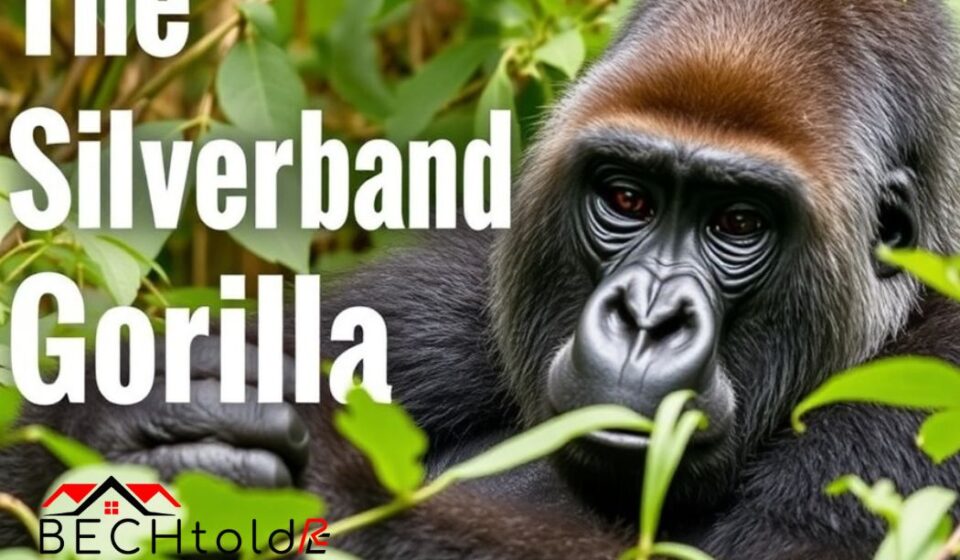

In the misty mountains and dense forests of Central Africa lives one of the most magnificent creatures on Earth: the silverback gorilla. The name alone evokes images of raw power, a massive chest beating in the jungle, and an animal that has inspired both fear and fascination for centuries.
But the reality of the silverback is far more complex and compelling than the Hollywood myth. While they are undoubtedly among the strongest animals on the planet, they are also gentle giants, devoted fathers, and intelligent beings who share over 98% of our DNA. A silverback is not a separate species, but a mature adult male gorilla—the distinguished leader of his family, named for the striking silver-gray hair that spreads across his back once he reaches maturity around the age of 12 .
This article delves deep into the life of the silverback gorilla. We will explore their astonishing physical capabilities, their intricate social roles as protectors and mentors, their surprising intelligence, and the critical challenges they face for survival in the 21st century.
Table of Contents
ToggleThe Making of a Silverback: Physical Power and Stature
The transformation from a juvenile “blackback” to a dominant silverback is a journey of physical maturation and social struggle. It is a title that must be earned, not just given.
Size and Strength That Defy Imagination
When a male gorilla reaches adolescence, he is known as a blackback. As he ages, typically between 11 and 13 years old, the hair on his back begins to turn grey or silver, signaling his transition into a potential leader . But this silver saddle is just one part of the story. The physical changes are monumental.
A silverback gorilla is the largest living primate. When standing erect, he can be up to 1.8 meters (6 feet) tall and weigh an average of 140 to 200 kilograms (310 to 440 pounds) . Exceptional individuals in the wild have been recorded weighing up to 267 kilograms (589 pounds) , while captive gorillas, with a steadier food supply, can sometimes exceed 310 kilograms (683 pounds) .
This size is backed by muscle density far greater than that of the strongest human. A silverback’s strength is almost legendary. It is estimated that a silverback is about nine times stronger than an average adult man. Reports suggest they can lift an astounding 800 kilograms (1,763 pounds) of dead weight . Their bite force is equally formidable, measured at around 1,300 PSI (pounds per square inch) —double that of a lion—used not just for defense but for crushing tough bark and fibrous vegetation .
Their massive muscles, particularly in their arms and chest, are essential for their primary mode of travel: knuckle-walking. Despite their bulk, they are surprisingly agile and can climb trees to feed, though the largest silverbacks often stay on the ground to avoid breaking branches .
The Role of the Leader: More Than Just Brute Force
It is easy to get lost in the statistics of a silverback’s power, but his true significance lies in how he uses that strength. Within a gorilla troop—which can range from 5 to 30 individuals—the silverback is the undisputed leader, the decision-maker, and the protector .
The Protector
The most well-known role of the silverback is that of the guardian. His group consists of several adult females, their infants, juveniles, and sometimes a few younger blackbacks. This family unit is his primary responsibility.
When faced with a threat—be it a leopard, a rival silverback from another group, or human encroachment—the silverback will not hesitate to put himself in harm’s way. Before resorting to violence, he engages in a dramatic display of intimidation designed to scare off intruders. This famous ritual includes:
-
Hooting loudly, which echoes through the forest.
-
Tearing and throwing vegetation.
-
Standing upright to maximize his silhouette.
-
Chest-beating with cupped hands, creating a rapid, popping sound that carries for long distances .
If this display fails, the silverback will charge. These fights, especially between two silverbacks competing for dominance or females, can be “short but vicious,” often resulting in severe injuries .
The Decision Maker and Gentle Mentor
Despite his fearsome reputation, a silverback’s daily life is defined by patience and gentleness. He is the center of his family’s universe. He decides where the group will travel each day to find the best food—sometimes leading them up to five miles—and where they will build their nests for the night .
Perhaps the most endearing aspect of a silverback’s personality is his role as a father and mentor. He is incredibly tolerant of the young infants in his group, allowing them to climb all over him, using him as a “living climbing frame.” He will play with them, break up squabbles between juveniles, and teach younger males how to fight and behave. This gentle patience is a key reason why females choose to stay with a particular silverback; they are drawn to leaders who provide safety and a stable, nurturing environment for their offspring .
Intelligence and Emotion: Our Closest Relatives
Gorillas share approximately 98.3% of their genetic code with humans, and this is reflected in their behavior and cognitive abilities .
Tool Use and Problem Solving
While chimpanzees are more famous for tool use, gorillas have also demonstrated remarkable intelligence. In the wild, silverbacks have been observed using sticks to test the depth of water before crossing, or using branches as makeshift bridges over swampy ground. They have been seen fashioning tools to help them gather food, such as using a stick to extract termites or ants—a behavior that requires foresight and planning .
Communication and Emotion
Silverbacks lead their troops using a complex language of over 25 distinct vocalizations, including grunts, belches (which indicate contentment), and roars . They also rely heavily on body language.
Perhaps the most famous example of gorilla intelligence was Koko, a western lowland gorilla who learned over 1,000 signs in American Sign Language and demonstrated a deep capacity for emotion, including grief and love . In the wild, silverbacks have been seen exhibiting sadness when an infant dies, often carrying the body for days. They are capable of laughter, jealousy, and forming deep, long-lasting bonds .
A Delicate Balance: Diet and Daily Life
Despite their immense strength and intimidating canine teeth, silverbacks are primarily herbivores. They are the gentle giants of the forest, spending most of their day eating to fuel their massive bodies.
A silverback can consume up to 34 kilograms (75 pounds) of vegetation per day. Their diet consists of:
-
Stems, shoots, and leaves (bamboo shoots are a favorite for mountain gorillas)
-
Fruit (when seasonally available)
-
Bark and pulp (which provides sodium)
-
Tree roots
-
Small invertebrates (snails, ants, and termites make up only about 1-2% of their diet) .
They rarely need to drink water, as the vegetation they consume is so moisture-rich. By eating and moving through the forest, they play a vital role as “gardeners of the forest,” dispersing seeds in their dung and opening up clearings that allow sunlight to reach the forest floor, encouraging new plant growth .
Conservation: Why the Silverback Needs Our Help
All gorilla subspecies are classified as Critically Endangered or Endangered by the International Union for Conservation of Nature (IUCN). The threats they face are severe and persistent. Current population estimates are sobering:
-
Western Lowland Gorilla: ~316,000 (Critically Endangered)
-
Eastern Lowland Gorilla: ~5,000 (Critically Endangered)
-
Mountain Gorilla: ~1,000 (Endangered)
-
Cross River Gorilla: <400 (Critically Endangered) .
The Poaching Crisis
Poaching remains a critical threat. While gorillas are sometimes killed for the bushmeat trade, the killing of a silverback is often linked to the live animal trade. Poachers will target a silverback to capture infants for sale, knowing that without their protector, the group will scatter, making the young vulnerable. The loss of a silverback is catastrophic; it often leads to the death of the entire group’s infants and the dissolution of the family unit .
Habitat Loss and Human Conflict
As human populations expand, forests are cleared for agriculture, mining, and logging, shrinking the gorillas’ habitat. This forces gorillas to venture onto farmland to eat crops, leading to conflict with humans. Furthermore, political instability in regions like the Democratic Republic of Congo (DRC) has led to armed conflicts within protected areas like Virunga National Park, endangering both the gorillas and the rangers who risk their lives to protect them (over 130 rangers have been killed in recent decades) .
The Overcrowding Paradox
In a surprising twist, conservation success in some areas has created a new challenge. In the Virunga Massif, the mountain gorilla population has rebounded significantly. However, this success has led to overcrowding. With limited space, different gorilla families are encountering each other more frequently, leading to violent clashes between silverbacks. Experts estimate that nearly half of all infant gorillas born in the region over the past decade have died in these inter-family fights as conquering silverbacks commit infanticide to bring the mothers back into breeding cycle. This tragic natural phenomenon underscores the need to expand protected habitats .
Gorilla Trekking: A Once-in-a-Lifetime Encounter
For those inspired to see these magnificent creatures in the wild, gorilla trekking offers an unparalleled experience. It is also a powerful conservation tool, as the revenue from tourism directly funds protection efforts and supports local communities.
You can observe habituated gorilla families in several national parks:
-
Volcanoes National Park (Rwanda)
-
Bwindi Impenetrable National Park & Mgahinga Gorilla National Park (Uganda)
-
Virunga National Park (Democratic Republic of Congo) .
Trekking permits are limited and expensive (often $1,500 in Rwanda) to ensure minimal impact on the gorillas. The trek can be physically demanding, but the reward is profound: spending one hour watching a wild silverback interact with his family in the misty mountain forest is an experience that changes you forever.
Conclusion
The silverback gorilla is a living paradox. He is a creature of immense power who chooses gentleness, a fierce protector who is also a playful parent. He is the anchor of his family and the key to the biodiversity of his forest home.
The challenges facing silverbacks are daunting, but they are not insurmountable. Through dedicated conservation efforts, anti-poaching patrols, community engagement, and responsible tourism, we can ensure that future generations will hear the thunderous beat of a silverback’s chest echoing through the African forests. Supporting organizations that protect gorilla habitats is not just about saving an animal; it is about protecting our own distant reflection.
Frequently Asked Questions About Silverback Gorillas (FAQ)
1. How strong is a silverback gorilla compared to a human?
A silverback gorilla is estimated to be approximately 9 to 15 times stronger than an average adult man. While a fit human can bench press around 150-200 lbs, a silverback is believed to have the potential to lift nearly 1,800 lbs (800 kg) . Their muscle mass is denser, and their bone structure is designed for immense force, primarily used for knuckle-walking and defense.
2. Are silverback gorillas aggressive?
Despite their terrifying “chest-beating” displays, silverbacks are not inherently aggressive. They are actually known as gentle giants. They will only become violent if they feel their family is threatened, if another silverback challenges them for dominance, or if they are cornered. The famous charge and display is usually a bluff to avoid physical conflict.
3. What do silverback gorillas eat?
They are primarily herbivores. A silverback’s diet consists mostly of stems, bamboo shoots, fruits, leaves, and bark. While they have large canine teeth, they use them for intimidation and defense rather than meat-eating. They occasionally eat small insects like ants or termites, but this makes up less than 2% of their diet.
4. Can a silverback gorilla swim?
No, gorillas cannot swim naturally. They are what is known as “obligate swimmers”—meaning they would drown if they fell into deep water without assistance. They avoid large bodies of water like rivers and lakes. In zoos, moats are often used as barriers because gorillas instinctively know they cannot cross them safely.
5. How long do silverback gorillas live?
In the wild, a silverback gorilla typically lives for 35 to 40 years. In captivity, where they have access to veterinary care and a steady food supply, they can live slightly longer, sometimes into their early 50s.
6. How much does a silverback gorilla weigh?
Adult silverback males weigh significantly more than females. They typically weigh between 135 to 195 kg (300 to 430 lbs) . However, some wild individuals have been recorded at over 220 kg (485 lbs), and captive gorillas can sometimes reach 275 kg (600 lbs) or more due to a high-calorie diet.
7. Why do silverbacks beat their chests?
Chest-beating is a complex form of communication. It serves several purposes:
-
Attracting females: It shows potential mates that he is strong and fit.
-
Intimidating rivals: The sound carries far and tells other males to stay away.
-
Status signaling: The frequency and sound of the beat can actually indicate the gorilla’s size to others without them having to see him.
It is important to note that gorillas often chest-beat when they are excited or nervous, not necessarily just before an attack.
8. What is a “Blackback” gorilla?
A “blackback” is a young male gorilla who has not yet reached full maturity. They are typically between the ages of 8 and 12. They are called this because they have not yet developed the distinctive silver hair on their back. Blackbacks often stay within their natal group until they are strong enough to challenge the dominant silverback or leave to form their own troop.
9. How many silverbacks are left in the world?
The number depends on the subspecies.
-
Mountain Gorillas: Approximately 1,063 individuals left in the wild (as of the last census), living in two main populations in Uganda, Rwanda, and DRC.
-
Western Lowland Gorillas: The most populous, with estimates around 316,000, though this number is declining rapidly due to poaching and disease.
-
Cross River Gorillas: Critically endangered, with fewer than 300 left.
-
Eastern Lowland Gorillas: Around 5,000 left.
10. Are silverback gorillas endangered?
Yes, all gorilla species are classified as either Endangered or Critically Endangered by the IUCN Red List. The Mountain Gorilla has recently been downgraded from “Critically Endangered” to “Endangered” thanks to intensive conservation efforts, but they still face extreme risks from habitat loss, poaching, and disease.
11. What happens when a silverback dies?
The death of a silverback is catastrophic for his family. If he dies, the group can scatter as there is no leader to keep them together. Females may join other groups or a new silverback may take over. If a new male takes over, he will often practice infanticide—killing the infants of the dead silverback—to bring the females back into estrus so he can mate with them and start his own bloodline.
12. Do silverbacks live alone?
Occasionally, some silverbacks live alone. These are usually males who have left their natal group but have not yet managed to attract females to form their own troop. These “solitary males” will wander the forest alone until they can challenge another leader or build their own family.

admin
M Umer Abbasi is a luxury lifestyle journalist and editorial curator specializing in haute horology, passion investments, and avant-garde design. With an eye for flawless craftsmanship and heritage storytelling, he deconstructs the world of high-ticket assets—from secondary watch market trends to the evolution of bespoke tailoring. His work focuses on shifting the luxury narrative away from fleeting trends and toward timeless design, raw materials, and true artisanship.