
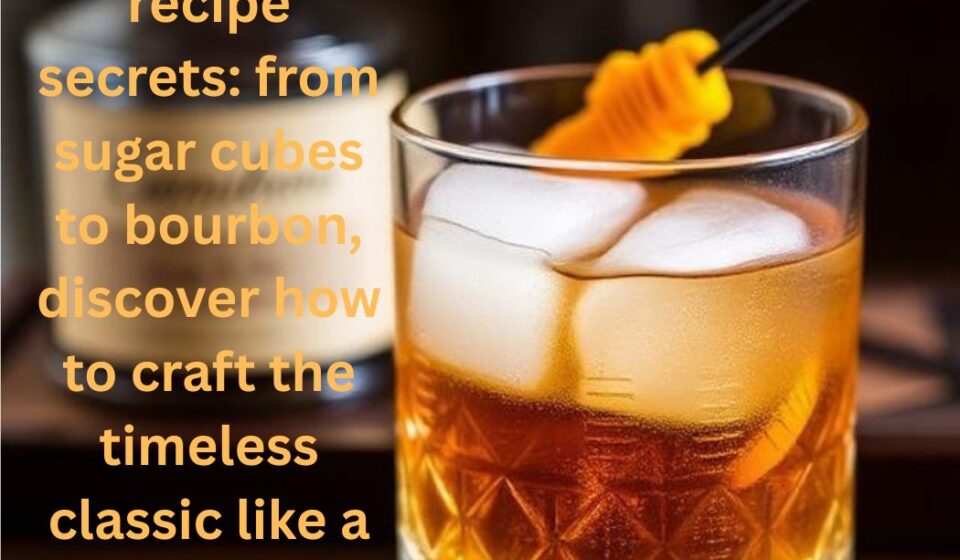

It’s a familiar scene. You’re at a bar with a wooden interior, the low hum of conversation around you. You want a drink that feels substantial, a drink with history. You order an Old Fashioned. The bartender gives a subtle, knowing nod. This simple order signals that you appreciate balance and tradition, and you’re ready for a cocktail that lets the spirit take center stage.
The Old Fashioned is more than just a drink; it’s a legend in a glass. In a world of molecular gastronomy and ever-changing cocktail trends, this classic stands as a testament to the power of simplicity. It’s a “cocktail” in the original sense of the word, and its enduring popularity proves that some recipes are timeless for a reason.
In this guide, we’ll journey through the rich history of the Old Fashioned, break down the classic recipe to its core components, and share expert tips to ensure you can make the perfect one every time.
History of the Old Fashioned: From “Bittered Sling” to Global Icon
The Old Fashioned wasn’t always known by that name. Its roots can be traced back to the early 1800s when a “cocktail” was simply defined as a combination of spirits, sugar, water, and bitters.
-
The First “Cocktail”: The earliest known definition of the word “cocktail” appeared in May 1806 in The Balance and Columbian Repository, a newspaper in Hudson, New York. In response to a reader’s question, the editor described it as “a stimulating liquor, composed of spirits of any kind, sugar, water, and bitters”—essentially, the blueprint for the Old Fashioned. It was even colloquially called a “bittered sling.”
-
The Rise of “Modern” Cocktails: By the 1860s, as illustrated in Jerry Thomas’s famous bartending guide, the simple cocktail formula began to change. Bartenders started adding liqueurs like Curaçao, absinthe, and other embellishments.
-
The “Old Fashioned” Name: As cocktails became more complex, a backlash formed. Some drinkers preferred the original, simpler formula and began ordering their whiskey “the old-fashioned way.” This phrase eventually became shorthand for a spirit, sugar, bitters, and water—no liqueurs, no fuss. By the 1880s, the name “Old Fashioned” was firmly in use.
Legend also ties the drink’s modern name to the Pendennis Club in Louisville, Kentucky, where a bartender supposedly crafted it for a gambler who requested a “Whiskey Cocktail, the old-fashioned way” using a specific bourbon. The Old Fashioned remains Louisville’s official cocktail.
The Core Philosophy: Simplicity is the Ultimate Sophistication
The genius of the Old Fashioned is its minimalism. The recipe usually includes:
-
A Base Spirit (Whiskey)
-
A Sweetener (Sugar or Syrup)
-
Bitters (Aromatic)
-
Water (from melted ice)
-
A Citrus Garnish
With so few ingredients, quality matters. There’s nowhere to hide.
The Base Spirit: Bourbon vs. Rye
Choosing the right whiskey is the most critical decision you’ll make. The Old Fashioned is a spirit-forward cocktail, meaning the whiskey’s character defines the drink.
-
Bourbon: Usually sweeter, with prominent notes of vanilla, caramel, and oak. It makes for a rounder, more mellow Old Fashioned.
-
Rye Whiskey: Often described as spicier, with notes of pepper, clove, and cinnamon. It creates a drier, more complex, and bolder cocktail.
Our Recommendation: The “best” whiskey is the one you enjoy sipping neat. If you wouldn’t drink it straight, don’t use it in an Old Fashioned. The cocktail is meant to highlight the spirit, not mask it.
The Sweetener: Sugar Cube vs. Simple Syrup
-
Sugar Cube: This is the traditional choice. A sugar cube is placed in the glass with bitters and a splash of water, then muddled until dissolved. This method gives you more control over texture and is a theatrical, old-school process.
-
Simple Syrup: Many modern bartenders prefer simple syrup (equal parts sugar and water). It dissolves instantly, eliminating the risk of gritty sugar at the bottom of the glass and ensuring a perfectly uniform sweetness.
The Bitters: The Soul of the Cocktail
Bitters are the seasoning that brings the drink to life.
-
Angostura Aromatic Bitters: The most traditional choice. It adds a complex, spicy, and herbal warmth that is the backbone of the classic Old Fashioned.
-
Orange Bitters: For an extra citrus kick, many recipes call for a dash of orange bitters alongside or instead of Angostura.
The Ice: A Crucial Ingredient
Dilution is not the enemy; it’s part of the recipe. The water from melted ice helps to mellow the whiskey and bind the flavors.
-
One Large Cube: Using one large ice cube (or a sphere) is highly recommended. It has less surface area than several smaller cubes, so it melts slower. This means your drink stays cold without becoming overly diluted too quickly.
The Classic Old Fashioned Recipe: Step-by-Step
This recipe is for the purist, following the spirit of the original “Whiskey Cocktail” as championed by modern mixologists.
Yield: 1 drink
Prep Time: 3 minutes
Ingredients
-
1 sugar cube (or 1 bar spoon / 1/4 oz of simple syrup)
-
2-3 dashes Angostura bitters
-
2 oz (60 ml) of your favorite Bourbon or Rye whiskey
-
Orange twist, for garnish (and optionally, a high-quality brandied or Luxardo cherry)
Instructions
-
Build in the Glass: Place the sugar cube in a sturdy rocks glass (also known as an Old Fashioned glass).
-
Add Bitters and Water: Add 2-3 dashes of Angostura bitters and a small splash of water (about a bar spoon’s worth) onto the sugar cube.
-
Muddle: Using a muddler or the handle of a wooden spoon, gently crush and stir the sugar cube until it has completely dissolved into the bitters and water. It should form a syrupy paste. (If using simple syrup, skip to step 4).
-
Add the Whiskey: Pour the 2 oz of whiskey into the glass.
-
Add Ice: Fill the glass with one large ice cube or a few smaller ones.
-
Stir: Using a bar spoon, stir the drink gently for about 30 seconds until it’s well-chilled and slightly diluted. The goal is to integrate the ingredients, not to “bruise” the spirit.
-
Garnish and Serve: Express the orange twist by holding it over the glass and giving it a sharp bend to release the citrus oils onto the surface of the drink. Rub the peel around the rim of the glass, then drop it in. If you like, add a cherry.
Mastering Your Old Fashioned: Pro Tips & Common Mistakes to Avoid
Avoid these common pitfalls to elevate your Old Fashioned from good to spectacular.
-
Mistake #1: Over-muddling. If you are using a sugar cube, muddle only until the sugar is dissolved. If using fruit (a less common variation), a gentle press is enough to release oils. Do not turn it into a fruit salad. Over-muddling can release bitter compounds from the pith of the fruit and make the drink cloudy and pulpy.
-
Mistake #2: Shaking, Not Stirring. This is a critical rule. Never shake an Old Fashioned. Shaking aerates the drink, introduces too much dilution, and can make it cloudy. Stirring gently chills the liquid while maintaining its silky, smooth texture and clarity.
-
Mistake #3: Using Poor Quality Ice. Small, rapidly melting ice cubes will quickly turn your robust cocktail into a watery mess. Use a single, large ice cube or a sphere. Its slow melt ensures that you get just the right amount of dilution over time.
The Great Garnish Debate
The classic garnish is an orange twist, which adds a bright, aromatic note. However, the maraschino cherry is a divisive topic.
-
The Purist View: The only garnish should be a citrus peel. A cherry is seen as an unnecessary, overly sweet addition that interferes with the whiskey’s flavor.
-
The Traditionalist View: A cherry is a classic addition and has been common since at least the 1930s. If you use one, ensure it’s a high-quality, dark brandied or Luxardo cherry, not a bright red, sugary maraschino cherry.
The Old Fashioned Today and in the Future (2026)
The Old Fashioned’s popularity shows no signs of waning. Its appeal is built on a foundation of authenticity and ritual.
-
The Modern Classic: The Old Fashioned is the number-one cocktail in the world, a title it has held for years. It serves as a litmus test for a good bar; a well-made Old Fashioned signals the bartender knows their craft.
-
The “Mad Men” Effect: The show Mad Men, featuring protagonist Don Draper’s frequent order of an Old Fashioned, helped ignite a resurgence in the drink’s popularity in the early 2000s, introducing it to a new generation who appreciated its classic, masculine simplicity.
Trends to Watch: Innovation on a Classic
As of 2026, the cocktail world is exploring new ways to honor this classic.
-
Gourmet Variations: Bartenders are putting a modern twist on the formula, using ingredients like Demerara syrup for a richer molasses flavor, or incorporating smoked elements like a burnt citrus peel for a wintery depth.
-
Spirit Exploration: While whiskey is king, you’ll increasingly see Old Fashioneds made with other spirits like aged rum, cognac, or even tequila to create new and exciting flavor profiles.
-
High-End Ingredients: The focus on quality is driving the use of small-batch, single-barrel whiskeys, house-made bitters, and artisanal garnishes to create the ultimate premium experience.
Key Takeaways
-
The Old Fashioned is one of the world’s oldest and most significant cocktails, defined by its simple yet perfect formula: spirit, sugar, water, and bitters.
-
Quality is paramount. Use a whiskey you enjoy, and don’t shake the drink.
-
Master the fundamentals: muddling, stirring, and choosing the right ice.
-
The Old Fashioned’s simplicity makes it infinitely customizable, allowing for gourmet variations to suit the modern palate.
Frequently Asked Questions
Do You Shake or Stir an Old Fashioned?
You should always stir an Old Fashioned. Stirring chills and dilutes the drink properly, preserving its clarity, texture, and the complex flavors of the whiskey. Shaking will aerate the drink, making it cloudy and overly diluted.
Can I Use Any Whiskey for an Old Fashioned?
Technically, yes. However, to get the best results, you should use a high-quality whiskey that you enjoy drinking neat. The Old Fashioned is a spirit-forward drink that is meant to showcase the flavor of the base spirit. Bourbon and rye are the most traditional choices.
How Much Bitters in an Old Fashioned?
The standard ratio is 2 to 3 dashes of bitters, with 2 dashes being the most common starting point. This provides enough bitter complexity to balance the sweetness and enhance the spirit without overpowering the drink.
What is the Difference Between an Old Fashioned and a Manhattan?
Both are classic whiskey cocktails, but their sweetener is the main difference. An Old Fashioned uses a sugar cube or simple syrup, while a Manhattan uses sweet vermouth. This makes the Manhattan a slightly more complex and wine-influenced drink.
Does an Old Fashioned Have a Cherry?
This is up for debate. The traditional purist garnish is an orange twist adding a cherry became a popular variation in the 1930s. Modern recipes often include both, but if using a cherry, it’s best to use a high-quality one like a Luxardo.
What Type of Glass is an Old Fashioned Served In?
It is served in a short, sturdy glass known as a rocks glass, Old Fashioned glass, or lowball glass. The design is perfect for building the drink in the glass and accommodating large ice cubes.
Sources
