
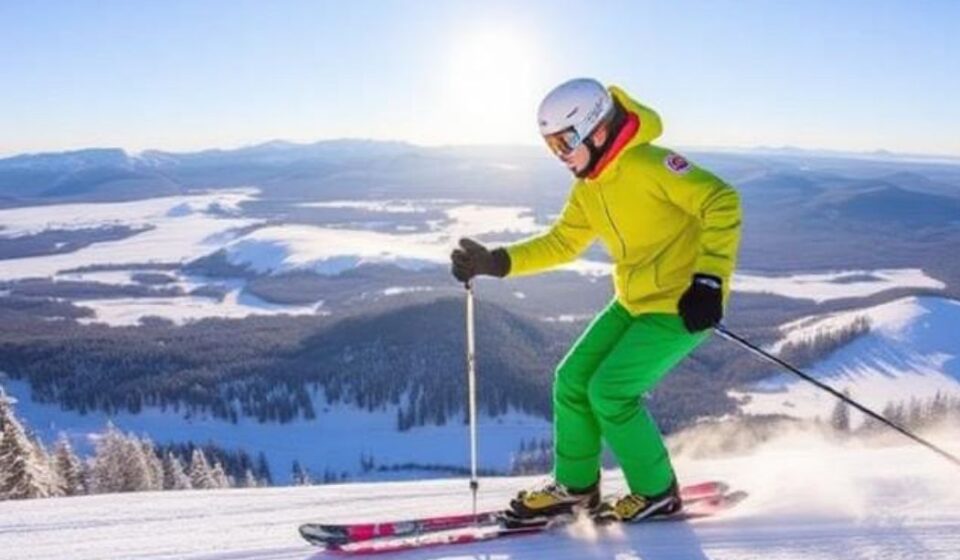

Have you ever watched skiers glide down a mountain, their movements fluid and graceful, and thought, “I could never do that”? You’re not alone. The image of skiing often conjures up daunting heights, expensive equipment, and a steep learning curve. And while those elements exist, the sport itself is an ancient dance of physics, balance, and trust.
Learning how to ski isn’t about conquering the mountain; it’s about learning how to work with gravity, terrain, and your own body in an unfamiliar environment. For many first-timers, the challenge isn’t strength or coordination—it’s understanding what skiing is actually asking you to do.
A surprising truth? Fitness level is less important than your willingness to learn. Long-distance runners aren’t necessarily better at learning to ski than anyone else. The best asset a beginner can bring is an open mind and a curiosity to make mistakes and try again. Those who get frustrated quickly often hit a wall; those who treat it like a puzzle tend to excel.
This guide is your comprehensive roadmap. We’ll cover everything from the fundamental techniques, safety, and gear to how to navigate the social etiquette of the slopes. But remember, the best tip isn’t in a blog post—it’s taking a lesson. As one expert perfectly put it, “It’s like you’ve just learned to walk, and then you decide to run a marathon. You don’t want to bite off more than you can chew”.
Table of Contents
ToggleBackground: Understanding the Sport
What is “Good” Skiing?
The goal of learning to ski isn’t about going fast. It’s about control. Good skiing looks effortless, but it is actually the result of precise movements. The best skiers share fundamental skills: balance, edging, and pressure control.
-
Balance: Keeping your center of mass over your skis.
-
Edging: Using the edges of your skis to grip the snow for turns.
-
Pressure Control: Applying force to the ski to bend it and initiate a turn.
Professional skiers demonstrate these skills in perfect harmony. They keep their skis parallel, their upper body still, and their arms forward. But for a beginner, we start with the basics.
The “Athletic Stance”
Your body’s base position is the blueprint for everything. Experts call it the “ready-for-action stance”. Imagine you’re a tennis player waiting for a serve.
-
Feet: Hip-width apart.
-
Knees: Bent. You should feel pressure against the front of your ski boots.
-
Hips: Flexed forward. You don’t want to stand up straight.
-
Arms: Out in front of you, like you’re holding a lunch tray.
This position is forward-leaning, which feels unnatural to a first-timer. Your natural instinct is to lean back (away from the fall line). This is the number one mistake beginners make. When you lean back, your skis lose contact with the snow and you lose control. The forward stance drives your shins into the boots, allowing the skis to do their work.
Main In-Depth Sections: The Breakdown
1. The Gear: Renting vs. Buying
You don’t need to buy expensive gear right away. Renting is the smart choice for beginners.
What to Rent:
-
Skis: Wider, softer skis are easier to turn.
-
Boots: This is the most important piece of your setup. Your boots should be tight, but not painful. A professional boot fitter is worth the time.
-
Poles: A basic pair is fine. Adjustable poles are great for touring, but not necessary for resort skiing.
Safety First: Always wear a helmet. There is no excuse to ski without one. Helmets are proven to reduce the risk of head injuries.
Dressing the Part:
Your clothing is a system. Dressing in layers allows you to adjust as you warm up.
-
Base Layer (Inner): Moisture-wicking material (wool or synthetic). Never wear cotton.
-
Mid Layer (Insulation): Fleece or a lightweight puffy jacket.
-
Outer Layer (Shell): Waterproof and windproof pants and jacket.
Don’t forget: Waterproof gloves (you’ll be touching the snow), goggles or sunglasses, and sunscreen—the sun reflects off the snow and is intense .
2. Technique: The Step-by-Step Progression
Here is a breakdown of the technical skills you will learn in your first few days.
A. The “Pizza” (Snowplow)
Goal: Stopping and speed control.
This is your braking system. You angle the tips of your skis together (forming a wedge) and push your heels apart. By applying pressure to the inside edges of the skis, you create friction that slows you down. It feels unnatural, but it is the foundation of safety.
B. The “French Fries” (Parallel)
Goal: Controlled gliding.
Once you can stop, you start to ski with your skis parallel. This is a natural progression. As you gain confidence, you will naturally bring your skis closer together to increase speed and glide.
C. Turning
Goal: Guiding your direction.
Turns are not created by twisting your skis or swinging your arms. They come from subtle weight shifts .
-
Weight Shift: To turn right, shift your weight to your left ski (your outside ski).
-
The “Pizza” Variation: Beginners often start by turning while in a snowplow.
-
Linking Turns: The holy grail. This is the ability to connect a series of turns smoothly, maintaining speed and control .
3. The Terrain: Reading the Mountain
Ski resorts use a color-coded trail system to indicate difficulty.
-
Green Circle: Beginner terrain. This is where you will spend your early days.
-
Blue Square: Intermediate terrain. Steeper than green.
-
Black Diamond: Advanced. Steep, often mogul-filled or icy.
-
Double Black Diamond: Expert terrain.
Expert Tip: The best way to get better is to ski, but the best way to master technique is to stay on terrain that feels comfortable. Resist the urge to push yourself onto a steep blue or black diamond too early; it forces you into bad habits (like leaning back). Having fun on the green runs builds the confidence to eventually explore the whole mountain.
Practical Tips / How-to: Actionable Advice
1. The “What if I Fall?” Mindset
Falling is part of learning. It means you are pushing your limits. If you fall:
-
Try to fall uphill or on your side.
-
Keep your hands in fists (so you don’t break fingers).
-
Ask yourself, “Did I learn something from that?”
2. Slope Safety
The “Highway” Rule: Treat the slope like a highway. You are responsible for the skier downhill from you, always. If you stop, move to the side of the trail. Before entering a trail, look uphill. You wouldn’t merge onto a highway without looking; don’t do it on a ski slope.
3. Energy Conservation
Skiing is physically exhausting. Take a break when you are tired. Fatigue leads to injury. Fatigue impairs balance and reaction time, making you more prone to accidents.
Common Mistakes or Challenges + Solutions
-
Leaning Back: The Problem. You feel like you’re going to fall backward, so you pull back. The Solution. Push your shins into the front of your boots. Imagine you’re crushing an orange with your shins.
-
Sitting Back (The “Backseat”): The Problem. Your hips are behind your feet. The Solution. Stand up straighter, flex your ankles, and push your shoulders forward.
-
Turning with Upper Body: The Problem. You twist your shoulders to try and steer. The Solution. Keep your upper body facing downhill. The legs do the turning; the upper body stays stable.
-
Pole Planting Issues: The Problem. Swinging arms wildly or holding poles stiffly. The Solution. A pole plant is a touch, not a punch. It helps initiate turns. Keep hands forward.
Pros, Cons, and Balanced Analysis of Skiing
| Pros | Cons |
|---|---|
| Incredible exercise. Great for legs, core, and cardio. | Expensive. Lift tickets, gear, and lessons are costly. |
| Scenery and adventure. Beautiful views and a connection to nature. | Weather dependent. You can have a bad day if conditions are icy or windy. |
| Skill progression. You can get better for decades. | Injury risk. Knee injuries and concussions are possible. |
| Social sport. Great for families and groups. | Steep learning curve. The first few days can be tiring and frustrating. |
| Low impact. Easy on joints compared to running, if done correctly. | Time commitment. It takes time to get to a mountain and gear up. |
Future Trends or Predictions (2026 & Beyond)
-
Focus on Sustainability: Ski resorts are investing heavily in renewable energy and water conservation.
-
Backcountry/Ski Touring: The pandemic accelerated interest in ski touring (hiking up to ski down). This is driving innovation in lightweight gear and avalanche safety systems like airbag backpacks. Even if you start with resort skiing, the “Alpine Touring” trend is worth keeping an eye on.
-
Technology in Lessons: Apps and GPS tracking are becoming more integrated into ski lessons, allowing for feedback on speed, distance, and turn shape.
-
Skis as Data: The 2026 Gear Guide highlights a huge shift toward “all-mountain” skis that can handle powder, groomers, and bumps, making gear less specialized and easier to use.
Conclusion: The Key Takeaways
Learning to ski is a rewarding journey. It’s about facing a fear of speed and terrain, and learning a skill that rewards precision and relaxation.
-
Take a Lesson. It is the most important investment you can make. One lesson is a “taste”; three lessons are a “foundation”. Group lessons are social and affordable; private lessons offer rapid progression.
-
Rent Gear. Don’t buy on day one. Rental packages are convenient and allow you to swap out gear if it doesn’t fit.
-
Master the Stance. Keep your weight forward and your hands in front. This solves 80% of beginner issues.
-
Embrace the Process. Falling is okay. Frustration is okay. Keep a sense of humor and celebrate small victories.
-
Safety First. Respect the mountain, other skiers, and your own energy levels.
FAQs
1. Is skiing hard to learn?
Yes, the first few days are physically demanding and counter-intuitive, but it is incredibly rewarding. Most people can ski a beginner slope with confidence after 2–3 days of lessons.
2. Is it better to learn to ski or snowboard?
Adults generally find skiing easier to learn in the short term. Skiing has a gentler learning curve; you can start on the chairlift and ski green runs on day one or two. Snowboarding has a steeper learning curve (more falling), but many find it easier to progress once they are comfortable.
3. What is the “Pizza” and “French Fries” technique?
The “Pizza” (snowplow) is a wedge where the tips of your skis are together, used to slow down. “French Fries” is when your skis are parallel, used for gliding. You’ll start with pizza and progress to french fries.
4. How much does it cost to learn to ski for beginners?
Costs vary heavily by resort. A “beginner package” (lift ticket, rental, and group lesson) can range from $150 to $300+ per day.
5. Do I need to be fit to ski?
A base level of fitness helps, but skiing is more about technique than strength. Focus on leg and core exercises (squats, lunges, planks) before your trip. You also don’t need to be a star athlete; it’s about coordination and being a good learner.
6. What should I wear?
Dress in layers. Base layer (wool/synthetic), mid layer (fleece), outer layer (waterproof shell). Always wear waterproof gloves and a helmet.
7. How do I stop?
You stop by pushing your heels apart, pointing the tips of your skis together (snowplow), and applying pressure to the inner edges. Push hard to slow down fast.
8. Can I learn to ski without lessons?
Yes, but it is highly discouraged. You are much more likely to get injured, develop bad habits, and frustrate yourself and others. Lessons are a game-changer.
9. How many lessons do I need?
One to get a taste. Three to build a foundation that allows you to ski the whole mountain confidently. Most resorts sell 3-lesson packages.
10. What is ski touring?
Ski touring involves using special bindings and “skins” (sticky strips) to hike up the mountain before skiing down. It is for intermediate/advanced skiers who want to ski off-piste/backcountry terrain. It requires advanced safety gear like avalanche transceivers and probes. If you are a beginner, focus on the resort.
Sources
-
GoSnowmass: How To Ski: The Complete Guide Of Tips For Beginners (Jan 2026)
-
Fischer Sports: Skiing the right way: The right technique
-
Sport Conrad: Packing list: Planning your first ski tour?
-
University of Rochester Medical Center: How to Ski Smarter: Staying Safe on the Slopes (Feb 2026)
-
Crystal Ski: How to ski: basics for beginners
-
Red Bull: How to get better at skiing: Tips to improve your skills
-
Backcountry Magazine: The 2026 Backcountry Gear Guide
-
PIH Health: Skiing or Snowboarding? Here’s the Safest Way to Do It (Dec 2025)
-
Visit California: A Beginner’s Guide to California Skiing
-
SKI Magazine: How to Master the Fundamentals of Ski Technique
-
Mammut: Ski touring gear » your guide to picking the right equipment
-
Canada.ca: Winter sports and recreation safety (Dec 2025)

admin
M Umer Abbasi is a luxury lifestyle journalist and editorial curator specializing in haute horology, passion investments, and avant-garde design. With an eye for flawless craftsmanship and heritage storytelling, he deconstructs the world of high-ticket assets—from secondary watch market trends to the evolution of bespoke tailoring. His work focuses on shifting the luxury narrative away from fleeting trends and toward timeless design, raw materials, and true artisanship.