
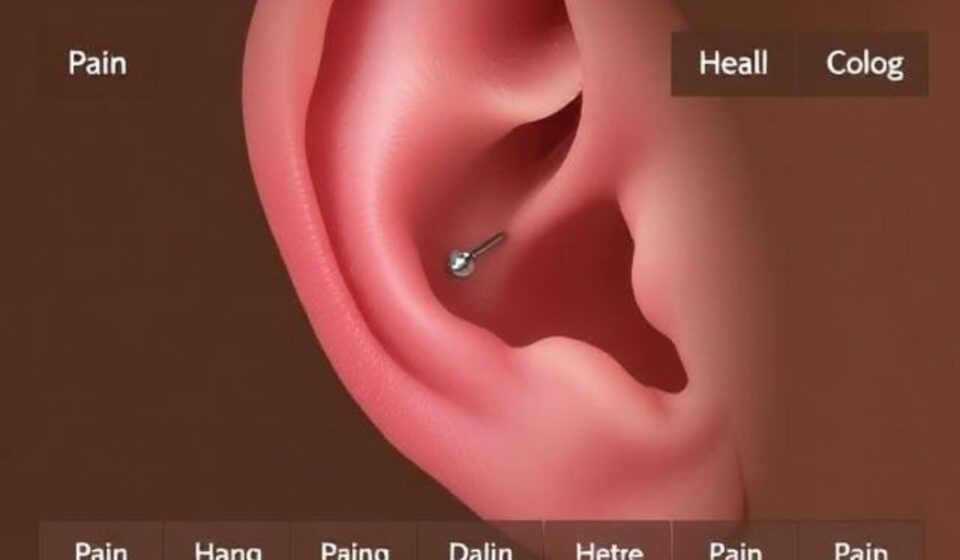

Are you standing in front of the mirror, tilting your head, and wondering which ear piercing would suit you best? You’re not alone. With so many options available today—from classic lobe piercings to intricate cartilage placements—navigating the world of ear piercings can feel overwhelming. Whether you’re a first-timer or a seasoned piercing enthusiast looking to expand your collection, a comprehensive ear piercing chart is your essential starting point.
An ear piercing chart serves as a visual roadmap to the various piercings possible on the ear. It identifies each placement, explains the anatomy involved, and provides crucial details about pain levels and healing times. Think of it as your guide to creating the perfect “ear stack” or “curated ear”—a thoughtfully designed arrangement of piercings and jewelry that expresses your personal style .
Types of Ear Piercings Explained
Let’s dive into the different ear piercing types, starting with the most common and moving toward the more unique and bold options. This comprehensive ear piercing chart will help you understand what each placement entails.
Lobe Piercing: The Classic Foundation
Placement: The soft, fleshy lower part of the ear.
Pain Level: Low – often described as a quick pinch .
Healing Time: 4-6 weeks, making it one of the fastest-healing piercings .
Jewelry Options: Studs, small hoops, and huggies.
The lobe piercing is the most common entry point into the world of ear piercings. It’s versatile, heals quickly, and offers endless styling possibilities. Many people start with a single lobe piercing and later add second, third, or even stacked lobe piercings to create a graduated look.
Helix Piercing: The Stylish Cartilage Option
Placement: The upper outer cartilage rim of the ear .
Pain Level: Moderate – manageable discomfort during the procedure .
Healing Time: 6-9 months, typical for cartilage piercings due to reduced blood flow to the area .
Jewelry Options: Hoops, studs, barbells .
The helix piercing is one of the most popular cartilage piercings. It offers a subtle yet eye-catching addition to your ear stack. Forward helix piercings, positioned closer to the face, are also gaining popularity as they create a beautiful “staircase” effect when done in multiples.
Tragus Piercing: A Bold Statement
Placement: The small, thick cartilage flap directly in front of the ear canal .
Pain Level: Moderate to High – due to the dense cartilage .
Healing Time: 3-6 months .
Jewelry Options: Hoops and studs .
The tragus piercing has become a favorite for those seeking a unique look. Its visibility from the front makes it a striking addition. However, be mindful of earbud use during the healing period—over-ear headphones or bone-conduction earbuds are better alternatives.
Conch Piercing: The Eye-Catching Statement
Placement: The inner or outer cartilage, just above the ear canal, resembling a conch shell .
Pain Level: High – due to the thick cartilage .
Healing Time: 6-9 months .
Jewelry Options: Hoops, studs, barbells .
The conch piercing serves as a fantastic focal point for any ear curation. A larger gemstone stud or a bold hoop in this placement instantly draws the eye. The inner conch sits closer to the ear canal (ideal for studs), while the outer conch is nearer the edge (perfect for hoops) .
Daith Piercing: Style with Potential Benefits
Placement: The cartilage fold just above the ear canal .
Pain Level: High – higher than lobe piercings due to the cartilage .
Healing Time: 6-9 months .
Jewelry Options: Hoops and clickers .
The daith piercing has gained notoriety not just for its unique aesthetic, but also because some people report it helps alleviate migraine symptoms, though this is based on anecdotal evidence rather than scientific proof . Its location within the ear makes it a hidden gem that adds dimension.
Industrial Piercing: The Bold Double
Placement: Two piercings connected by a single barbell across the upper ear .
Pain Level: High – involves two piercings at once .
Healing Time: 6-12 months, one of the longest healing times .
Jewelry Options: A straight barbell .
The industrial piercing is not for the faint-hearted. It requires a specific ear anatomy—your ear must have the right curve to accommodate a straight bar. The fact that you’re getting pierced twice in one session adds to the pain and healing commitment. The result, however, is a bold and striking geometric statement.
Rook and Snug Piercings: The Unique Additions
Rook Piercing: Located in the upper part of the ear on the ridge between the outer and inner sections, often confused with the daith . Pain level is high (6/10), with a healing time of 6-12 months .
Snug Piercing: Also known as the anti-helix, this horizontal piercing sits between the inner and outer ear rims. It’s considered one of the most painful ear piercings—ranked at 9/10 pain level . Healing time: 4-6 months. Not everyone’s anatomy supports this piercing, so consultation with a professional piercer is essential .
Ear Stacking: The Curated Ear Trend
Beyond individual piercings, the real magic happens when you combine multiple placements into an “ear stack.” Ear stacking has become one of the most personal and visible ways to style jewelry . It’s no longer about how many piercings you have—it’s about how they flow together to tell your story .
Key Principles for Creating a Curated Ear:
-
Start with a Focal Piece – Choose a statement piece to anchor your stack and build around it with smaller, simpler elements .
-
Cascade and Graduate – Arrange earrings so that larger, heavier pieces sit near the lobe, and smaller ones move up the ear for balance .
-
Mix Metals Intentionally – Mixing metals like gold, silver, and rose gold is encouraged in 2026, but it should feel deliberate, not random .
-
Use Negative Space – Leave some areas unfilled. Spacing lets individual pieces shine and keeps the look elegant .
-
Consider Comfort – Choose lightweight pieces and flat-back studs for comfort, especially if you wear jewelry 24/7 .
Pain, Healing, and Aftercare Summary
Here’s a quick reference based on the comprehensive ear piercing chart we’ve covered:
| Piercing Type | Pain Level (1-10) | Healing Time | Jewelry Options |
|---|---|---|---|
| Lobe | 1-2 | 1-2 months | Studs, small hoops |
| Helix | 4-7 | 3-6 months | Hoops, studs, barbells |
| Tragus | 4 | 6-12 months | Hoops, studs |
| Conch | 6 | 3-9 months | Hoops, studs, barbells |
| Daith | 5 | 6-9 months | Hoops, clickers |
| Industrial | 5-7 | 4-6 months | Barbell |
| Rook | 6 | 6-12 months | Curved barbells, hoops |
| Snug | 9 | 4-6 months | Hoops |
Note: Pain levels are subjective and vary per individual .
Choosing the Right Piercing for You
Consider these factors when planning your ear curation:
-
Anatomy: Not every ear can support every piercing. A professional piercer will assess your ear shape and cartilage thickness .
-
Lifestyle: If you’re active, prioritize flat-back studs and secure closures. If you wear earbuds frequently, think twice about a tragus piercing during the healing period .
-
Style: Are you drawn to minimalist looks with delicate studs, or do you prefer bold, statement pieces? Define your aesthetic to keep your collection cohesive .
-
Quality Materials: Invest in implant-grade titanium or 14k/18k gold. These materials are hypoallergenic and reduce the risk of irritation .
Frequently Asked Questions
Q: How long do ear piercings take to heal?
A: Lobe piercings take 4-6 weeks, while cartilage piercings can take 6-12 months—some even up to 18 months.
Q: What is the most painful ear piercing?
A: The snug and rook piercings are considered the most painful, with pain levels reaching 9/10.
Q: Can I wear earbuds with a tragus piercing?
A: It’s not recommended during the healing period. Over-ear headphones are a better alternative.
Q: Does a daith piercing really help with migraines?
A: Some people report relief, but this is based on anecdotal evidence, not scientific proof.
Q: How many piercings can I get in one session?
A: Most professional piercers recommend no more than 3-4 piercings per session to allow your body to heal properly.
Conclusion
Your ear piercing chart is more than a diagram—it’s your launchpad to a curated, artistic, and personal form of self-expression. Whether you’re starting with your first lobe piercing or building an elaborate constellation, knowledge is your most powerful tool. Choose a reputable piercer, invest in quality materials, and be patient with the healing process. Your ears are a canvas—make them a masterpiece.