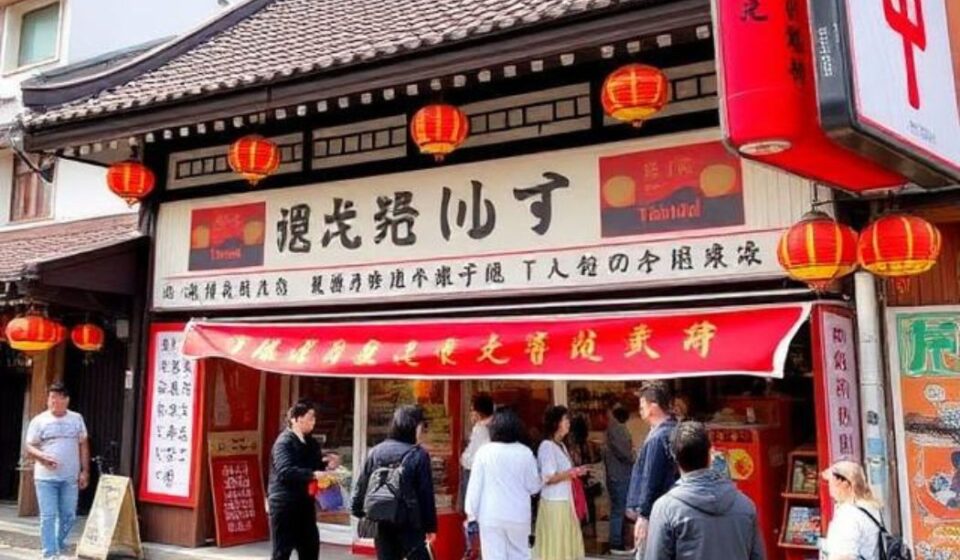

Imagine stepping into a bustling night market in Taipei. The air is thick with the scent of stinky tofu and grilled squid. You hear a vendor call out in a sing-song, rhythmic dialect, only to be answered by a young customer in a completely different, more clipped tone. Then, a tourist from Hong Kong asks for directions in Mandarin, but it sounds subtly different from what you hear on the mainland. Meanwhile, an elderly man watches the news, understanding the anchor’s formal speech, but preferring to chat with his friend in a language that carries the weight of history.
If you have ever asked, “What language do people in Taiwan speak?” you have stumbled onto one of the most fascinating, politically charged, and vibrant linguistic landscapes in the world. The simple answer is Mandarin Chinese. But to stop there would be like saying the United States only speaks English. In reality, Taiwan is a symphonic blend of languages, each with its own story of survival, suppression, and revival.
In 2026, Taiwan is not just a “Tech Island” ; it is a battleground for identity, where languages like Taiwanese Hokkien, Hakka, and Indigenous Formosan tongues are fighting for their lives in a world dominated by Mandarin and English.
This isn’t just about linguistics. It is about history, politics, and the future of a nation. Let’s dive deep into the language Taiwan speaks.
Table of Contents
ToggleBackground: A History Forged in Language
To understand what Taiwan speaks today, we must look at its turbulent past. The island’s linguistic heritage has been shaped by waves of colonization and political change.
The Era of Suppression and “Mandarin Only”
For nearly 40 years, from 1949 to the late 1980s, Taiwan was under Martial Law. The Kuomintang (KMT), who had retreated to Taiwan after losing the Chinese Civil War, needed to solidify their rule. Their tool of choice? Language .
Mandarin (specifically the standard Guoyu) was imposed as the sole official language. It was the only language allowed in schools and media . The KMT aggressively discouraged local languages—Taiwanese Hokkien, Hakka, and Indigenous tongues—often portraying them as backward, vulgar, or inferior . In schools, children were punished for speaking their mother tongues. A common punishment was wearing a signboard around their necks that read, “I must not speak Taiwanese” . The goal was to create a unified, Mandarin-speaking society to strengthen the regime’s legitimacy .
The Democratic Shift and Language Revival
When martial law ended in 1987, a wave of democratization (known as bentuhua or Taiwanization) swept the island . By the 1990s, a backlash against the rigid Mandarin-only policy had begun. The government started promoting mother-tongue education, and by the mid-1990s, local languages were introduced into school curricula .
This set the stage for the complex multilingual environment we see today.
The Main Languages of Taiwan Today
So, if you are visiting or doing business in Taiwan, what are the languages you are most likely to hear?
Taiwanese Mandarin: The Lingua Franca (The “Official” Language)
Mandarin is the undisputed lingua franca of Taiwan. It is the official language of public administration, the education system, and the media . If you speak Mandarin in Taipei, you will almost certainly be understood by anyone under 60 .
However, it is not “standard” Beijing Mandarin. Taiwanese Mandarin has its own flavor. Influenced heavily by Taiwanese Hokkien, it has unique vocabulary, grammar, and a distinct accent . They also use Traditional Chinese characters (as opposed to Simplified Chinese used in Mainland China) and a phonetic system called Zhuyin Fuhao (Bopomofo) rather than Pinyin . This variant is often referred to as “Guoyu” (National Language) or “Taiwanese Mandarin.”
Taiwanese Hokkien (Taiwanese / Taigi): The Heartbeat of the Island
If Mandarin is the language of the head (formality, education, work), Taiwanese Hokkien (also called Tâi-gí or simply “Taiwanese”) is the language of the heart. Spoken by approximately 70% of the population as a native language , it is the main language of everyday life in many parts of Taiwan .
Taiwanese is a variant of Southern Min, originating from Fujian Province in China . It is the language you hear at traditional temples, in the rural countryside, and passed down through generations in families. Despite its historical suppression, it has made a massive comeback in recent years, now featuring in broadcast media and music.
Even so, its use is declining among the youth. A 2020 statistic showed that while 66.4% of people primarily used Mandarin, only 31.7% used Taiwanese as their main language, and a significant 54.3% used it only as a secondary language .
Hakka: A Culture of Resilience
Hakka is spoken by about 15% of the population . It is another Chinese language variant, with its own distinct phonology and vocabulary. The government supports Hakka language preservation, but like Taiwanese, it is struggling to maintain its numbers in the younger generation.
Formosan Languages: The Oldest Voices
Before the Chinese arrived, Taiwan was home to Austronesian-speaking Indigenous peoples. Today, these Formosan languages are spoken by about 2% of the population and are recognized as “national languages” . The 16 officially recognized indigenous groups, including Amis, Atayal, and Bunun, have their own languages .
These languages are critically endangered. UNESCO has even voiced concern that Taiwanese Hokkien is in danger, and the situation for Indigenous tongues is even more urgent .
The Rise of English and “New Immigrant” Languages
Taiwan is in the middle of its “2030 Bilingual Nation” policy . This ambitious plan aims to make Taiwan an English-speaking nation to boost economic competitiveness . While this goal is widely debated (does it push out local languages?), it is a clear sign that English is growing.
Furthermore, Taiwan is home to a growing number of “New Immigrants” from Southeast Asia, bringing languages like Vietnamese, Tagalog, and Indonesian into the linguistic mix . In 2025, a study on the multilingual linguistic landscape in Taoyuan City highlighted the increasing presence of these Southeast Asian languages on public signs .
Practical Advice for Travelers and Professionals
So, how do you navigate this linguistic maze? Here is some actionable advice:
-
Speak Mandarin for Daily Life: If you are a traveler or professional, Mandarin is your best bet. It will get you through 99% of interactions, from business meetings to ordering at a restaurant in Taipei.
-
Learn a Few Words of Taiwanese: It is a great icebreaker. Even if you just say “Li-ho” (Hello), locals will appreciate the effort. It shows respect for the local culture that goes beyond the official language.
-
Don’t Call it “Chinese” in the Wrong Context: In Taiwan, “Mandarin” is often referred to as Guoyu (National Language) or Huayu (Chinese Language). Calling Taiwanese Hokkien “just a dialect” can be offensive. Acknowledge that it is a vibrant language in its own right.
-
Age Matters: You will hear more Taiwanese from older people in the south. You will hear more Mandarin (and English) from younger people in Taipei .
Common Challenges and Solutions
Challenge 1: The “Dialect” vs. “Language” Debate.
Some scholars and politicians view Taiwanese Hokkien or Hakka as “dialects” of Chinese. Linguistically, they are distinct languages (not mutually intelligible with Mandarin), but the classification is often political. In Taiwan, they are increasingly referred to as “national languages” to honor their status .
Solution: Respect the speaker. If a person prefers to speak Taiwanese, they likely consider it a distinct language. Use the term “Taiwanese” or “Hokkien” rather than “dialect.”
Challenge 2: The Decline of Mother Tongues.
The younger generation speaks Mandarin at home and at school. According to one report, as few as 6% of teenagers understand Taiwanese .
Solution: Support the revival. Groups like “Taiwan Taigi Loo Association” are pushing for Taiwanese-medium schools and community revitalization efforts .
Challenge 3: The “2030 Bilingual Nation” Debate.
Is English the answer? Critics argue that promoting English might further marginalize Taiwanese and Indigenous languages, making them “problem” languages in a globalized world .
Solution: Informed dialogue. Understand that Taiwan is trying to juggle economic necessity (English) with cultural preservation (Local languages). A recent proposal suggests not “bilingualism” but a true “multilingualism” that embraces all .
A Balanced Analysis: Pros and Cons of the Current System
Pros:
-
Functionality: The dominance of Mandarin provides a common thread that unites different ethnic groups (Hoklo, Hakka, Mainlanders, Indigenous).
-
Global Competitiveness: The push for English aims to connect Taiwan to the global tech economy .
-
Growing Awareness: The government is officially recognizing and funding the preservation of Taiwanese, Hakka, and Indigenous languages .
Cons:
-
Loss of Heritage: Despite revival efforts, many younger Taiwanese are unable to speak their mother tongues fluently .
-
Identity Politics: Language is heavily politicized. Speaking Taiwanese vs. Mandarin is often seen as a political statement regarding Taiwan’s relationship with China .
-
Conflict of Policy: The “Bilingual 2030” policy, which focuses on English, clashes with the “National Languages Development Act,” which focuses on local languages .
Future Trends and Predictions (2026 and Beyond)
What is next for Taiwan’s linguistic landscape? Here are three key trends to watch:
-
The Stagnation of English? While the Bilingual 2030 policy exists, some scholars argue it is more symbolic than effective . There are concerns about urban-rural divides in English proficiency.
-
The Rise of “Language Rights”: As of 2026, civic groups are pushing back against the “monopoly of Mandarin” . They are calling for a National Languages Development Act that would truly prioritize local languages over Mandarin.
-
A Multilingual Future: We are moving toward a “Mandarin-plus” world. Taiwanese will become a language of cultural heritage (like Irish in Ireland), English will be the tool for business, and Indigenous languages will be safeguarded for posterity.
Conclusion
The question “What language does Taiwan speak?” reveals a nation at a crossroads. It speaks Mandarin Chinese for daily survival and economic function. But it also desperately wants to speak Taiwanese Hokkien to connect with its roots, Hakka to honor its ancestral resilience, Indigenous languages to heal the wounds of colonialism, and English to compete on the global stage.
Key Takeaways:
-
Mandarin is dominant. It is the official language and necessary for daily life.
-
Taiwanese Hokkien is the native soul. It is the language of the family and is undergoing a revival.
-
Indigenous languages are national treasures. These Formosan languages are critically endangered but fiercely protected.
-
English is the future, but not without a fight. The “Bilingual 2030” policy aims to make English an official language, sparking debate about the cost to local heritage.
-
Context is everything. In Taiwan, language choice is about identity, politics, and history.
Detailed FAQs
1. What is the official language of Taiwan?
The official language is Mandarin Chinese (known as Guoyu in Taiwan). It was established as the official language in 1945 after the end of Japanese rule .
2. Is Taiwanese the same as Chinese?
No. “Chinese” usually refers to Mandarin, which is the official language. “Taiwanese” colloquially refers to Taiwanese Hokkien (or Tâi-gí), a different language in the Sino-Tibetan family that is not mutually intelligible with Mandarin .
3. Do they speak English in Taiwan?
English is not an official language, but a significant number of people, especially the younger generation in urban areas like Taipei, speak English. The government is currently pushing a “2030 Bilingual Nation” policy to make English an official second language .
4. How many people speak Indigenous languages in Taiwan?
About 2% of the population speak one of the 16 Indigenous Formosan languages. Many of these languages are endangered .
5. Was Japanese spoken in Taiwan?
Yes. Taiwan was a Japanese colony from 1895 to 1945, and Japanese was the official language during that time. Some elderly Taiwanese still speak it, and the Japanese influence has left a mark on Taiwanese Hokkien vocabulary .
6. Why is Taiwanese Hokkien dying out?
Because of the KMT’s “Mandarin-only” policy from 1949 to the late 1980s, which heavily suppressed Taiwanese. Many parents stopped teaching it to their children, leading to a rapid decline .
Sources
-
Wikipedia (Archived) – Languages of Taiwan
-
Taiwan News – Culture minister urges stronger support for Taiwan’s languages
-
Taylor & Francis Online – Simultaneous promotion of bilingualism and multilingualism?
-
Day Translations – Languages of Taiwan
-
Wikipedia (Archived) – Taiwanese Mandarin
-
Taiwan News – Taipei City Council forms Taiwanese Language Revitalization Caucus
-
ERIC – Official Bilingualism in a Multilingual Nation
-
NHK World-Japan – A Language Identity: Taiwan
-
NTU Exam – Taiwanese Mandarin
-
CNA – 民團籲政策停止獨尊華語
-
LINGUIST List – New Immigrants and Multilingual Linguistic Landscape in Taiwan
Tags:
Language Taiwan Speak
admin
M Umer Abbasi is a luxury lifestyle journalist and editorial curator specializing in haute horology, passion investments, and avant-garde design. With an eye for flawless craftsmanship and heritage storytelling, he deconstructs the world of high-ticket assets—from secondary watch market trends to the evolution of bespoke tailoring. His work focuses on shifting the luxury narrative away from fleeting trends and toward timeless design, raw materials, and true artisanship.