
Imagine standing in a drugstore aisle, overwhelmed by a wall of serums, each promising to erase wrinkles, banish breakouts, or bestow a dewy glow. You pick up a bottle, read the label, and hope for the best. This scene is the reality of the modern beauty consumer—paralyzed by choice and often stuck in a costly trial-and-error cycle. What if you could simply take a selfie and have a personalized, data-driven plan handed to you?
Welcome to the age of AI-powered skincare.
No longer a futuristic fantasy, artificial intelligence is rapidly becoming the most trusted tool in our beauty arsenal. As of 2026, the surge in AI-powered skincare tools has been staggering, with Google searches for the term reportedly jumping by over 2,600% in recent months. This isn’t just a tech fad; it’s a response to a real problem: the beauty industry is drowning in products, and AI is the life raft that offers clarity, customization, and convenience.
Table of Contents
ToggleFrom Guesswork to Genomics: The Rise of the Algorithmic Dermatologist
For decades, skincare advice was largely generic—products were categorized for “dry,” “oily,” or “combination” skin. But skin is far more complex than a one-size-fits-all label. It’s a living, dynamic ecosystem influenced by genetics, diet, stress, weather, and even the bacteria living on its surface.
AI technology cuts through this complexity by processing vast amounts of data that the human eye (and even the most experienced aesthetician) might miss. This shift is moving us away from a “broadcast” model of beauty advice to a “conversational” and deeply personalized one.
The Power of the Selfie: AI-Powered Skin Analysis
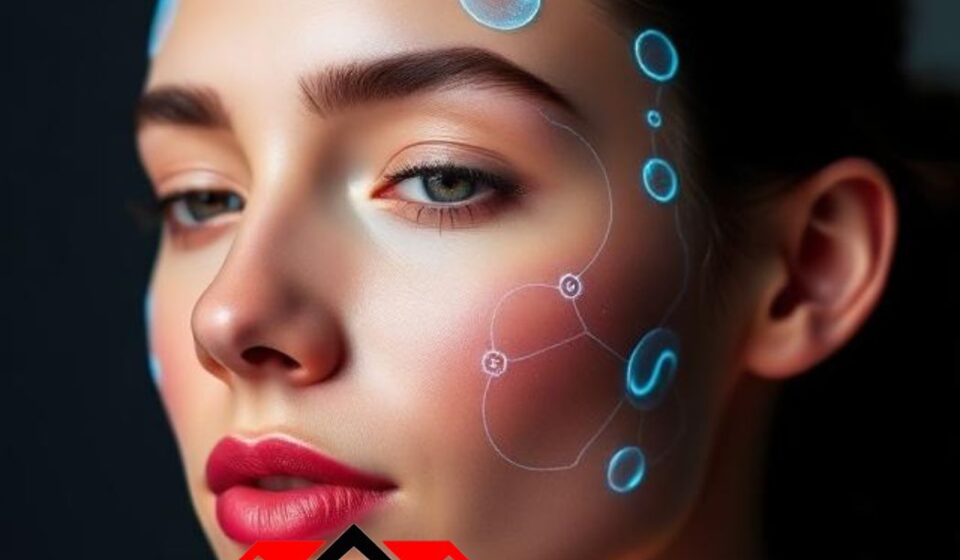
The most visible and accessible form of AI in skincare is AI skin analysis. Instead of just guessing your skin type, these tools use computer vision to analyze a photograph of your face and detect over a dozen conditions, including texture, pores, redness, oiliness, pigmentation, fine lines, and acne lesions.
Apps like the “Intelligent Skin Health Analysis Tool” and commercial platforms such as SKintellet use advanced machine learning models like YOLOv5 to identify issues in real-time. They don’t just tell you “you have acne”; they can map out specific lesions, assess severity, and track changes over time. This is a game-changer for tracking progress and understanding how your skin reacts to different products.
Beyond the Surface: The AI Chatbot Consultant
Taking personalization a step further, AI chatbots like Fynd’s SkinGPT are transforming the online shopping experience. Unlike static quizzes, these chatbots engage in a dynamic conversation.
Imagine visiting a brand’s website. Instead of filling out a generic form, you type: “My skin feels tight and itchy, especially after washing my face.” The AI adapts in real-time, asking follow-ups: “Does this happen year-round or more in winter?” or “Do you experience redness with this?” It then uses this information to build a step-by-step AM/PM routine using the brand’s actual product catalogue, explaining the “why” behind each recommendation—even simplifying complex ingredients like niacinamide and hyaluronic acid.
Similarly, the Noli platform, backed by L’Oréal, offers a BeautyDNA™ algorithm that analyzes over 80 criteria from your scan and chat to curate a routine from a portfolio of trusted brands like La Roche-Posay and CeraVe.
The Next Frontier: Genomics and the Microbiome
For those who want to look even deeper beneath the surface, the future of AI skincare is predictive and preventative. This is where the field of cosmetogenomics comes in. It is the integration of AI with genomics (the study of your genes) to create hyper-personalized skincare.
Here’s how it works:
-
Genetic Testing: You provide a DNA sample (like a cheek swab).
-
AI Analysis: AI algorithms analyze your Single Nucleotide Polymorphisms (SNPs)—tiny genetic variations that can indicate a predisposition to collagen degradation, oxidative stress, or inflammation.
-
Personalized Plan: The AI predicts how your skin will age and recommends specific ingredients and treatments that are genetically optimized for you.
Furthermore, research is increasingly linking AI with skin microbiome diversity. Your skin has a unique ecosystem of bacteria that plays a crucial role in conditions like acne, eczema, and rosacea. AI can analyze this microbiome composition and propose skincare solutions designed to restore balance, rather than just treating the symptoms.
Practical Tips: How to Use AI for Your Best Skin Yet
Adopting AI skincare doesn’t mean replacing your dermatologist, but it can significantly enhance your routine. Here’s a step-by-step guide to using this tech effectively:
-
Start with a Deep Scan: Use a dedicated skin analysis app to get a baseline. These apps are excellent for identifying issues you may not see in the mirror, like early sun damage or uneven texture.
-
Be a Good Prompt Engineer: If using a chatbot like ChatGPT or Gemini, don’t just ask “What’s a good moisturizer?” Provide context. Include your age, gender, climate, shower frequency, main concerns (like aging gracefully), and even your budget. One PCMag reporter successfully built an entire routine this way.
-
Analyze, Don’t Just Accept: Use AI as a starting point. Cross-reference recommendations with other tools to see if there’s a consensus. The PCMag writer used both ChatGPT and Gemini to cross-check suggestions.
-
Know When to Stop: Understand what AI can’t do. If you have a medical condition like severe acne, eczema, or perioral dermatitis, AI will likely (and should) recommend you see a dermatologist. Platforms like Noli explicitly refuse to treat these conditions, making the distinction between a cosmetic concern and a medical one.
Common Mistakes and Challenges
While AI is powerful, it’s not perfect. Here are pitfalls to avoid:
-
Confusing the Algorithm with a Doctor: This is the most critical mistake. A skin scan is not a clinical exam. AI sees a surface; a doctor sees a medical history. An app might flag a mole, but it cannot biopsy it.
-
The “Black Box” Problem: Many users don’t know how the AI came to a conclusion. This lack of transparency can be an issue. Look for platforms that explain their methodology.
-
Data Privacy Concerns: You are sharing intimate data about your face. Ensure the platform you’re using has strong data security measures (like SOC2, GDPR, and ISO certifications) and that you have consented to how your data is used.
-
Bias in Algorithms: Many AI models are trained on primarily fair-skinned faces, making them less accurate for darker skin tones. This is a significant challenge that the industry is actively working to solve.
Pros, Cons, and a Balanced Analysis
Let’s weigh the good with the bad.
| Pros of AI Skincare | Cons of AI Skincare |
|---|---|
| Hyper-Personalization: Moves beyond generic skin types to routines based on real-time data and genetics. | Not a Medical Diagnosis: Cannot replace clinical expertise and is unsuitable for diagnosing diseases. |
| Time and Money Savings: Reduces the trial-and-error loop, helping you avoid expensive products that don’t work. | Data Privacy Risks: Requires handling sensitive biometric data, raising concerns about security and misuse. |
| Education: Demystifies ingredients and routines, making users smarter about their choices. | Algorithmic Bias: May be less effective or inaccurate for those with non-Caucasian skin due to limited training data. |
| Objective Tracking: Can accurately measure progress, showing you the actual impact of your routine over time. | Lack of Explainability: Some systems are “black boxes” where the user doesn’t understand the reasoning behind the recommendation. |
| 24/7 Accessibility: AI chatbots are available anytime, anywhere, providing instant advice. | Over-reliance: Users may become overly dependent on the app, leading to anxiety or a belief that they can self-treat serious conditions. |
Future Trends and Predictions (Beyond 2026)
The next few years will see AI in skincare become even more integrated and predictive.
-
Digital Twins: AI will create a “digital twin” of your skin, a dynamic model that simulates how your skin will look at 3, 6, or 12 months if you follow a specific routine.
-
Smart Biomaterials: AI will accelerate the development of new smart creams and ingredients that adapt to your skin’s condition in real-time.
-
Collaborative Care: AI will become a standard tool in dermatology clinics, used to enhance patient consultations, provide better triage, and simulate the outcomes of cosmetic procedures like laser and injectables.
💡 Key Takeaways
-
AI is a powerful advisor, not a doctor. Use it for routine optimization, not for medical diagnosis.
-
The best results come from combining data sources. Use skin scans (visual data), chatbots (conversational data), and potentially genomics (biological data) for a holistic view.
-
Always prioritize data privacy. Use only reputable, certified platforms that are transparent about their data usage.
-
The ultimate goal is to educate. AI empowers you to become an expert on your own skin, breaking the cycle of guessing.
Frequently Asked Questions (FAQs)
1. Is AI skincare analysis accurate?
It is highly accurate at detecting visible signs like redness, texture, fine lines, and acne lesions. However, it is a decision-making aid, not a clinical exam. Its accuracy also depends on the quality of the data and the algorithm’s training, which can sometimes be biased.
2. Can an AI chatbot replace a dermatologist?
No. AI is a tool for personalized recommendations and education. It is not equipped to diagnose, treat, or prescribe for medical skin conditions. The consensus across experts is that AI is a complementary tool, not a replacement for a board-certified dermatologist’s expertise.
3. What is the “BeautyDNA” algorithm mentioned in some apps?
BeautyDNA is an AI algorithm (like the one used by the Noli platform) that claims to analyze over 80 different criteria from a face scan and user input to curate a personalized skincare routine. It bridges the gap between a simple selfie analysis and a deep diagnostic tool, but it remains an algorithm for routine building, not medical treatment.
4. How does cosmetogenomics use AI?
Cosmetogenomics uses AI to analyze your genes (specifically, variations called SNPs) to predict how your skin will age or react to certain ingredients. This allows for a “predictive” approach to skincare, allowing you to preemptively target concerns like collagen loss or inflammation before they become visible.
5. What are the main privacy risks with AI skincare apps?
The primary risk is the collection and potential misuse of your facial biometric data and genetic information. If these databases are hacked or sold without consent, they can be used for unwanted purposes. Always use apps with explicit consent policies, strong security certifications (like GDPR or SOC2), and check their data storage policies.
Sources:
-
Haykal, D. (2024). Emerging and Pioneering AI Technologies in Aesthetic Dermatology… Cosmetics
-
Haykal, D., Flament, F., et al. (2025). Cosmetogenomics unveiled: a systematic review of AI, genomics… Frontiers in Artificial Intelligence
-
Poddar, G. (2026). What is SkinGPT? Fynd
-
(2026). AI-Powered Skincare: When the Mirror Becomes an Interface. Luxsure
-
(2026). Noli: the AI tool that tells you which skincare to use. Stylist
-
(2026). Forget complex skincare, Noli is the AI tool that builds a personalised routine for you. Cosmopolitan
-
Circelli, R. (2026). My Skin Was a Dry, Itchy Mess Until ChatGPT Taught Me How to Moisturize. PCMag
-
(2025). CuraSense: AI-Powered Mobile Application for Personalized Skincare Recommendations. IEEE Xplore
-
AI-enhanced Personalized Skincare: Implications for Skin Microbiome Diversity… DTIC

admin
M Umer Abbasi is a luxury lifestyle journalist and editorial curator specializing in haute horology, passion investments, and avant-garde design. With an eye for flawless craftsmanship and heritage storytelling, he deconstructs the world of high-ticket assets—from secondary watch market trends to the evolution of bespoke tailoring. His work focuses on shifting the luxury narrative away from fleeting trends and toward timeless design, raw materials, and true artisanship.