
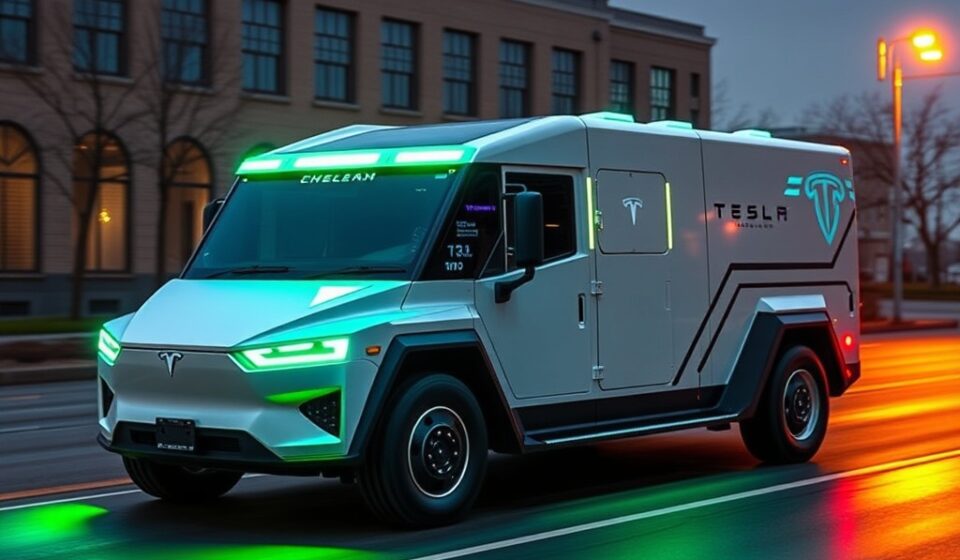
Pentagon Big Tech Tesla Cybertruck: Why the Military Is Blowing Up EVs

Pentagon Big Tech Tesla Cybertruck: The image is as bizarre as it is symbolic: the U.S. Air Force is taking steps to acquire Tesla Cybertrucks for the express purpose of blowing them up with missiles. While this sounds like a peculiar waste of futuristic hardware, it actually represents a significant shift in the relationship between the Department of Defense (DoD) and Silicon Valley.
In August 2025, the U.S. Air Force Material Command filed documents revealing its intent to purchase two Tesla Cybertrucks, along with 31 other vehicles, to serve as targets in live-fire training exercises . The move is not an indictment of the vehicle’s quality, but rather a fascinating indicator of how the Pentagon is preparing for the battlefields of the future.
Here is why the Pentagon is targeting Tesla, and what it tells us about the deepening, and sometimes controversial, ties between Big Tech and the military.
Why the Cybertruck Makes a Unique Target
At first glance, using a brand-new, stainless-steel electric vehicle as a target seems counterintuitive. However, the Air Force’s reasoning, outlined in federal procurement documents, is rooted in realistic training.
According to the filings, enemies may “likely” transition to using vehicles like the Cybertruck, which are more resistant to certain types of damage . The logic is straightforward: if U.S. adversaries begin utilizing advanced, commercially available electric vehicles with durable exoskeletons, troops need to know how they will react to munitions.
The documents specifically cite the Cybertruck’s “aggressively angular and futuristic design, paired with its unpainted stainless steel exoskeleton” as reasons it differs from standard models . The Air Force needs to see how these unique materials and shapes perform when hit. The goal is to “mirror real world situations” and “simulate scenarios as closely as possible to the real world situations” . The vehicles don’t even need to be fully operational—they just need to be intact enough to roll into position .
The ‘Camel’s Nose Under the Tent’
While the target practice itself is a routine training evolution, defense experts see it as a much larger symbol.
Gordon Adams, a professor of U.S. foreign policy at American University and a defense spending expert, told Fortune that this procurement is “symbolic of an evolving relationship between, in general, the high-tech sector and the Department of Defense” . He referred to it as “the camel’s nose under the tent” regarding the deepening ties between the DoD and Elon Musk’s business empire .
Musk’s companies are already deeply embedded with the DoD:
-
SpaceX has secured billions in contracts for launch services and national security missions .
-
Starlink has provided critical satellite connectivity for military operations, most notably in Ukraine .
This relationship extends far beyond Musk. The Pentagon is actively partnering with a who’s who of Silicon Valley. Peter Thiel’s Palantir landed a massive $10 billion contract with the U.S. Army, and OpenAI recently won a $200 million contract to apply AI to security challenges .
A ‘Whole New Sector’ of Militarized Tech
This collaboration isn’t new, but its pace has accelerated dramatically. The foundation was laid about a decade ago under the Obama administration, which pushed initiatives to create a “people bridge” between the tech sector and the Pentagon . For years, tech companies avoided government work, viewing it as bureaucratic and unprofitable. Now, the allure of massive, stable contracts—and the chance to work on cutting-edge problems—has changed their minds.
The scale is staggering. In fiscal year 2024, Pentagon contracts with the private sector accounted for $445 billion out of $755 billion in total government obligations . With proposed defense spending bumps under the current administration, these numbers are only expected to grow.
“We’re going full-bore into the privatization of technology through the Defense Department using the high-tech capabilities of companies like Apple and Microsoft, Palantir and other contractors, including Elon Musk’s operations,” Adams said. “So it’s a process which is very much now out of control” .
Clearing Up the $400 Million Confusion
It is important to note that the target practice story is separate from another recent headline-grabbing event. Earlier, a State Department procurement forecast mentioned a potential $400 million purchase of “armored Teslas.” This led to a flurry of speculation about a massive contract for the Cybertruck.
However, officials later clarified that no contract was awarded. The listing was part of an early planning stage and was later amended to the generic term “armored electric vehicles” and subsequently put on hold . While the Air Force is indeed seeking Cybertrucks to blow up, the massive purchase of armored Teslas for diplomatic missions remains a rumor, not a reality .
The Future of Battle: Code, Data, and Consumer Tech
The integration of commercial technology into defense strategy goes beyond just vehicles. Recent reports indicate that the military is leveraging Musk’s AI, Grok, integrating it into vehicles and even exploring its use for data analysis and logistics . This raises significant questions about data privacy and the role of commercial products in national security.
As one analyst put it, we are witnessing the creation of a “whole new sector” where the lines between consumer tech and military hardware are blurring . The Cybertruck, with its angular design and electric heart, is just the most visible symbol of this new, high-tech defense landscape.
What are your thoughts on the Pentagon’s deepening ties with Big Tech? Is this a necessary evolution for national security, or does it blur ethical lines? Share your comments below.
Frequently Asked Questions: Pentagon Big Tech Tesla Cybertruck
General Questions
Q1: Is the Pentagon actually buying Tesla Cybertrucks to blow them up?
A: Yes, but with important context. In August 2025, the U.S. Air Force’s Material Command filed procurement documents seeking to purchase two Tesla Cybertrucks specifically for use as targets in live-fire training exercises. The vehicles will be subjected to missile strikes and other munitions to help troops understand how advanced electric vehicles respond to battlefield conditions. The total procurement includes 33 vehicles, with the Cybertrucks being part of this target fleet.
Q2: Why would the military destroy expensive vehicles like this?
A: The rationale is purely practical. According to the procurement documents, U.S. intelligence suggests that adversaries may “likely” begin using vehicles like the Cybertruck, which feature unique construction materials and designs. The Air Force needs to understand:
-
How the stainless steel exoskeleton reacts to different munitions
-
Whether electric vehicle batteries pose secondary hazards when struck
-
How the vehicle’s angular design affects radar signatures and targeting
-
What vulnerabilities exist that troops can exploit in combat scenarios
This type of “live-fire testing” is standard military practice—they routinely destroy vehicles, aircraft, and equipment to gather critical data. The difference here is the commercial, high-profile nature of the target.
Q3: Does this mean the Cybertruck is being considered for military use?
A: Not directly. The Air Force is not evaluating the Cybertruck for troop transport or combat roles. However, the testing could reveal whether the vehicle’s design offers genuine tactical advantages that might interest defense contractors. If the Cybertruck proves unusually resilient, it’s possible that some of its design principles could influence future military vehicle development. For now, it remains strictly a target.
Financial and Contract Questions: Pentagon Big Tech Tesla Cybertruck
Q4: How much is this costing taxpayers?
A: The exact line-item cost for the two Cybertrucks hasn’t been specified in the procurement filings, but a new Cybertruck Foundation Series retails between $100,000 and $120,000 depending on configuration. The total contract for all 33 vehicles (which includes other makes and models) is valued at several million dollars. While this sounds expensive, it’s a fraction of the cost of developing custom target vehicles or using live animals in training—both alternatives the military has used historically.
Q5: What about the $400 million armored Tesla contract I heard about?
A: That was a separate, and largely misunderstood, situation. Earlier in 2025, a State Department procurement forecast listed a potential $400 million purchase of “armored Teslas” through 2029. This led to widespread headlines about a massive government contract.
Here’s what actually happened:
-
The listing was part of the State Department’s forecast of potential future needs, not an active contract
-
Officials later clarified that no contract was awarded
-
The listing was amended to read “armored electric vehicles” rather than specifically “Tesla”
-
The entire procurement was subsequently placed on hold pending further review
The $400 million figure represented a maximum potential value over multiple years if the program moved forward—it was never approved spending.
Q6: How much does the Pentagon actually spend with Big Tech?
A: The scale is enormous and growing rapidly. In fiscal year 2024 alone:
-
Total Pentagon contracts with private sector: $445 billion
-
Total government obligations (all agencies): $755 billion
-
Defense spending represents roughly 59% of all federal contract dollars
Major tech companies have seen explosive growth in defense work:
-
SpaceX: Billions in launch contracts and national security missions
-
Palantir: Recent $10 billion U.S. Army contract
-
OpenAI: $200 million contract for AI security applications
-
Microsoft, Amazon, Google: Combined defense and intelligence contracts exceeding $15 billion annually
Technical and Operational Questions: Pentagon Big Tech Tesla Cybertruck
Q7: What makes the Cybertruck uniquely interesting as a target?
A: According to the Air Force procurement documents, several features make the Cybertruck worthy of study:
-
Stainless steel exoskeleton: Unlike traditional vehicles with stamped steel body panels over a frame, the Cybertruck uses thick, cold-rolled stainless steel as structural skin. This could affect how fragments penetrate and how blast waves transfer.
-
Aggressively angular design: The flat planes and sharp angles create different radar cross-sections compared to curved military vehicles. Understanding how enemy radar “sees” these shapes helps in both targeting and counter-detection.
-
Electric powertrain: The battery pack location, thermal runaway potential, and electromagnetic signature all differ from internal combustion vehicles. Troops need to know what to expect when engaging electric vehicles in combat.
-
Commercial availability: Because the Cybertruck is mass-produced and sold globally, it’s realistic that adversaries could obtain and militarize them—unique military vehicles are easier to spot.
Q8: Will the military test the Cybertruck’s much-hyped “armor”?
A: During Cybertruck’s launch, Elon Musk famously claimed the stainless steel body could withstand bullets (though subsequent testing by independent reviewers showed mixed results). The live-fire exercises will likely settle this question definitively—at least against military-grade munitions. Expect classified data on exactly how much punishment the vehicle can absorb, though public summaries may emerge later.
Q9: Could the Cybertruck actually survive a missile strike?
A: Almost certainly not in any functional sense. The purpose isn’t to see if the vehicle “survives” but to study the effects—how the vehicle fails, what secondary hazards emerge, and what parts remain identifiable. A direct hit from a Hellfire missile or similar anti-tank weapon would destroy any unarmored commercial vehicle. The data comes from understanding the specific failure modes.
Strategic and Policy Questions: Pentagon Big Tech Tesla Cybertruck
Q10: Why is the Pentagon suddenly partnering so closely with Silicon Valley?
A: This represents a strategic shift that began around 2015. Several factors drive it:
-
Technology acceleration: Commercial tech now advances faster than military-specific R&D in many areas—AI, software, batteries, autonomy.
-
China competition: The U.S. views maintaining technological superiority over China as critical. Partnering with American tech giants leverages commercial innovation for national security.
-
Workforce challenges: The Pentagon struggles to recruit top software and AI talent. Contracting with companies that already employ these experts is faster than building internal capacity.
-
Cost efficiency: In theory, adapting commercial technology is cheaper than bespoke military development (though critics dispute whether this holds true in practice).
-
Ukraine war lessons: The conflict demonstrated how commercial drones, satellite communications (Starlink), and software-defined systems transform modern warfare.
Q11: Is Elon Musk uniquely positioned with defense contracts?
A: Musk’s companies have indeed secured significant defense work:
-
SpaceX is now indispensable for national security launches
-
Starlink became critical in Ukraine, though its future role remains debated
-
Tesla has received smaller contracts, including this target procurement
-
xAI (his AI company) is reportedly being integrated into military systems for data analysis
However, Musk isn’t alone—Palantir’s Peter Thiel, Amazon’s Jeff Bezos, and Microsoft’s leadership have all aggressively pursued defense business. The broader trend is Silicon Valley’s embrace of the Pentagon after years of reluctance.
Q12: What are the ethical concerns about Big Tech’s military work?
A: Critics raise several concerns:
-
Autonomous weapons: AI contracts raise fears about machines making life-and-death decisions.
-
Data privacy: When commercial AI systems like Grok are integrated into military operations, questions arise about data handling and potential commercial use of military information.
-
Accountability: Private companies aren’t subject to the same oversight as government agencies. If a Palantir algorithm or SpaceX system fails in combat, who’s responsible?
-
Escalation risk: Some argue that advanced tech partnerships make it easier for the U.S. to engage in military operations, lowering the threshold for conflict.
-
Workforce ethics: Tech employees have protested defense work at Google, Microsoft, and Amazon, leading to internal cultural conflicts.
Q13: Is this “privatization of war” out of control?
A: That’s a matter of perspective. Defense expert Gordon Adams, quoted in the main article, describes the trend as “a process which is very much now out of control” because the scale and speed of privatization have outpaced public debate and oversight.
However, supporters argue:
-
The U.S. has always relied on private defense contractors
-
The Founding Fathers envisioned a civilian-led military supported by private industry
-
Modern technology is too complex for government to develop alone
-
Proper oversight structures exist (GAO audits, Congressional oversight, contracting regulations)
The debate reflects fundamental questions about democracy, technology, and military power in the 21st century.
Practical Questions: Pentagon Big Tech Tesla Cybertruck
Q14: Will the public ever see the results of these tests?
A: Possibly, but with heavy redaction. The military typically releases summary information from live-fire tests years after they occur, once the data is no longer operationally sensitive. Don’t expect detailed ballistics reports or vulnerability assessments anytime soon. However, you may eventually see declassified photos or videos of destroyed Cybertrucks as part of broader training documentation.
Q15: Could I buy a “military-grade” Cybertruck someday?
A: Unlikely. The Cybertrucks being tested are standard commercial vehicles, not modified military variants. Tesla has shown no interest in producing a purpose-built military vehicle (units like Rivian, which has explored defense contracts). If the testing reveals design features worth adopting, defense contractors might incorporate similar elements into future vehicles—but they won’t be Teslas.
Q16: How can I stay updated on this story?
A: Follow these sources:
-
Federal procurement databases: SAM.gov posts contract opportunities and awards
-
Defense trade press: Defense News, Air Force Times, Breaking Defense
-
Government watchdog groups: Project On Government Oversight (POGO) tracks defense contracting
-
Tech/business publications: Fortune, Bloomberg, and Reuters have covered this story extensively
Glossary of Terms: Pentagon Big Tech Tesla Cybertruck
| Term | Definition |
|---|---|
| DoD | Department of Defense |
| Live-fire testing | Military exercises using actual munitions against real targets to gather data |
| Procurement | The process of purchasing goods and services by government agencies |
| RFP/RFQ | Request for Proposal / Request for Quote—formal solicitation documents |
| GAO | Government Accountability Office, which audits federal spending |
| Thermal runaway | Uncontrolled battery heating that can cause fires in electric vehicles |
| Exoskeleton | Structural body design where the skin bears load, versus body-on-frame construction |