
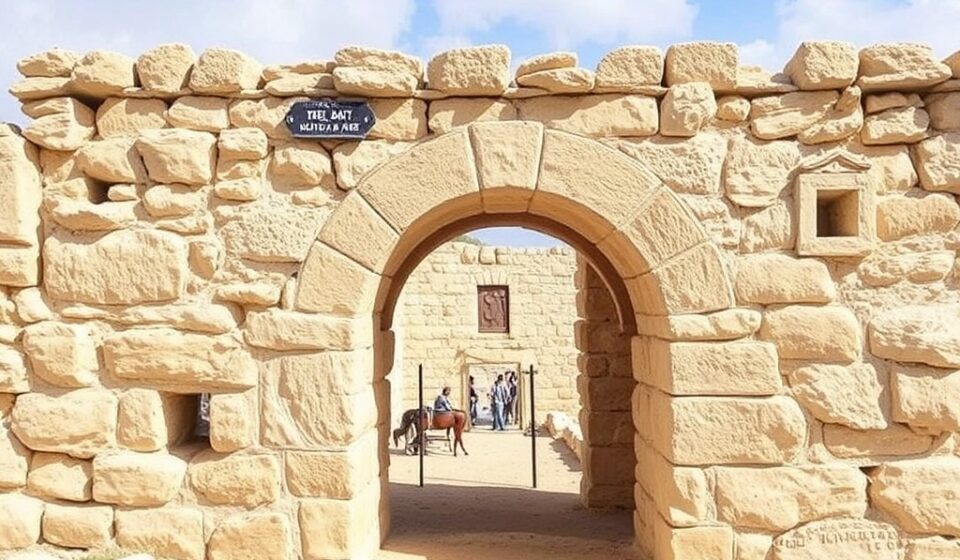

The name “Beit Bart” (more accurately transliterated as Betar or Beitar) resonates through Jewish history as a symbol of ultimate sacrifice and fierce resistance. While often misspelled, the story of this ancient stronghold is one of the most dramatic and tragic episodes of the Roman period. Located in the Judaean Mountains, Betar is famously known as the last bastion of the Bar Kokhba revolt (132–135 CE), a moment that defined the end of Jewish statehood for nearly two millennia .
This article explores the rich history of Betar, from its earliest inhabitants to its fall and the powerful legacy it has left on modern Israeli culture.
The Ancient Fortress and Its Strategic Importance
The ruins of ancient Betar, known today as Tel Betar or Khirbet al-Yahud (“Ruin of the Jews”), are located near the modern Palestinian village of Battir, a name that remarkably preserves the site’s ancient identity . The choice of location was no accident of history.
A Natural Stronghold
Betar stood like a sentinel atop a prominent hill approximately 11 kilometers (6.8 miles) southwest of Jerusalem—a fortress nature itself had shaped. The site rises to about 680 meters (2,230 feet), with deep valleys guarding its western, northern, and eastern flanks. These features made a direct assault incredibly difficult [citation:8]. To the south, a saddle linked the fortress to a neighboring hill; there, archaeologists have spotted the remains of Roman siege camps, still visible from the air today [citation:9]. Its proximity to a Roman road connecting Jerusalem to Beit Guvrin also highlights its strategic significance in the regional network [citation:8].
Early History
Betar’s significance predates the Bar Kokhba revolt. Archaeological findings, including pottery and a LMLK-stamped jar handle from the 8th century BCE, suggest the site was inhabited during the Iron Age II, likely as part of the Kingdom of Judah [citation:10][citation:13]. While not mentioned in the standard Hebrew Bible, it appears in the Greek Septuagint as one of the cities of the Tribe of Judah [citation:8].
Later, coins from the Hellenistic and Hasmonean periods, including those of Alexander Jannaeus and Herod the Great, confirm continued habitation through the Second Temple period [citation:14]. Following the destruction of Jerusalem in 70 CE, Betar grew in importance, and it is believed that Jewish institutions relocated there, setting the stage for its role as the headquarters of the revolt [citation:8].
The Final Stand of Bar Kokhba
The Bar Kokhba revolt was a massive Jewish uprising against the Roman Empire under Emperor Hadrian. Simon Bar Kokhba, the leader of the revolt, chose Betar as his final stronghold [citation:11]. The city became the last symbol of Jewish sovereignty, and its siege in the summer of 135 CE was brutal and decisive.
The Roman Siege
The Roman response was overwhelming. Historical sources and archaeological evidence suggest a siege force numbering between 10,000 and 12,000 soldiers [citation:25]. Units such as the Legio V Macedonica and Legio XI Claudia were brought in, as evidenced by a Latin inscription found carved into a rock near a water source in Battir, indicating they managed the logistics of the campaign [citation:17][citation:20].
The defenders of Betar, under pressure from the advancing Roman army, hastily constructed defensive walls. Archaeologists have noted that these walls were uneven and filled with earth and stones, incorporating older structures in a desperate bid for protection [citation:21]. The Roman camps surrounding the city were large enough to house thousands, laying the groundwork for a prolonged and inescapable siege [citation:20].
Evidence of Battle
The hills of Betar still hold the echoes of this ancient battle.
Artifacts uncovered at the site tell a vivid story of fierce combat:
-
Slingstones: Excavations have unearthed dozens of slingstones, including a massive example weighing 41 kg (90 lbs) and measuring 30 cm in diameter [citation:22][citation:23]. The inconsistent sizes and rough surfaces of these stones indicate hasty production during the siege [citation:23].
-
Arrowheads: Archaeologists have also recovered iron arrowheads typical of the Bar Kokhba era, featuring three ridges and a tang. These match similar artifacts discovered in refuge caves throughout the Judaean Desert [citation:24].
The Fall and Its Aftermath
According to Jewish tradition and the writings of 4th-century historian Eusebius, the siege ended in disaster. After a long period, the Romans breached the walls, leading to a massive massacre of the city’s inhabitants. The Jerusalem and Babylonian Talmuds recount the tragedy, stating that tens of thousands were killed .
The fall of Betar marked the final, catastrophic end to the Jewish revolt. So profound was the loss that it is observed on the fast day of Tisha B’Av, alongside the destruction of the First and Second Temples, as a day of national mourning . The site itself, now a ruin, became known by its Arabic name, Khirbet al-Yahud, literally the “Ruin of the Jews,” preserving the memory of the catastrophe in the local topography [citation:6].
The Legacy of Betar: From Ancient Ruin to Modern Symbol
While the ancient city was destroyed, its name was reborn centuries later as a powerful symbol of national pride and resilience.
The Birth of a Movement
In 1923, the name Betar was adopted by the Revisionist Zionist youth movement . Founded by Ze’ev Jabotinsky, the movement (Brit Yosef Trumpeldor, or Betar) sought to invoke the heroism of Bar Kokhba and the defenders of the ancient fortress. It symbolized a new kind of Jew: proud, self-reliant, and ready to defend his or her people.
Commemorative Settlements
This modern legacy is etched into the landscape of Israel. In 1950, the moshav Mevo Beitar was established by members of the Betar movement, located near the site of the ancient city. Later, in 1990, the settlement (and now city) of Beitar Illit was founded just one kilometer from the archaeological ruins. Explicitly named to honor the memory of ancient Betar. These communities serve as a living link between the Jewish past and present.
A Typo with a Double Meaning
It is worth noting that searches for “Beit Bart” or “Beit Bart” sometimes lead to information about the influential German playwright Bertolt Brecht. While a misspelling, exploring Brecht’s “epic theater” and his critiques of society offers a different. Yet equally compelling, intellectual journey through 20th-century modernism.
Conclusion
The story of Betar is one of defiance, tragedy, and rebirth. From its archaeological remains—the slingstones, the hurried walls, the Roman camps—we can piece together the final, desperate days of a revolt. Yet, the name “Betar” did not remain buried in the rubble of 135 CE. It was resurrected in the 20th century to inspire a new generation fighting for Jewish statehood.
For visitors to Israel today, standing at the site of ancient Betar and looking toward the modern city of Beitar Illit is to witness a historical narrative spanning nearly two thousand years—a story of destruction and remarkable renewal.
Have you visited any historical sites that tell a story of ancient and modern connection? Share your thoughts in the comments below!
Frequently Asked Questions About Beit Bart
To help clarify the different meanings and stories associated with “Beit Bart,” we’ve compiled a list of the most frequently asked questions.
General Questions & The Name’s Ambiguity
1. What does “Beit Bart” actually mean?
The meaning depends heavily on the context. The word “Beit” (בית) is Hebrew for “house of” . The second part, “Bart,” is ambiguous.
-
In a historical Jewish context: It is almost certainly a common misspelling or transliteration variation of Betar (or Beitar), the ancient fortress of the Bar Kokhba revolt .
-
In a modern cultural context: It can refer to a specific cultural village or heritage site known for its preserved traditions and architecture .
-
In a culinary context: It is the name of a renowned restaurant celebrated for its unique dining experience .
2. Why is it so hard to find consistent information about “Beit Bart” online?
The primary reason is transliteration. Translating words from Hebrew and Aramaic into English often leads to multiple spelling variations (e.g., Betar, Beitar, Beit Bart). This inconsistency, combined with the fact that the term may refer to local, informal place names not found in official registries, makes online searches challenging .
3. Is Beit Bart a city or official location in Israel?
The Israel Central Bureau of Statistics Geographic Registry does not list any officially registered locality under the exact Romanized spelling ‘Beit Bart.’ Historians and archaeologists know the historical site as Tel Betar or Khirbet al-Yahud. Located near the modern city of Beitar Illit and the village of Battir .
Questions About the Ancient Fortress of Betar
4. Where is the ancient Betar located?
The archaeological site of ancient Betar (Tel Betar) is situated on a hilltop approximately 11 kilometers (6.8 miles) southwest of Jerusalem. It is strategically located near the modern Palestinian village of Battir, which remarkably preserves the ancient name .
5. Why was Betar so important in Jewish history?
Betar is famous as the last stronghold of the Bar Kokhba revolt (132–135 CE). Its fall to the Romans marked the final, catastrophic end of the Jewish revolt against the Roman Empire. The event was so significant that it is mourned on the fast day of Tisha B’Av. Alongside the destruction of the First and Second Temples .
6. What happened at the siege of Betar?
The site was besieged by a massive Roman force. Evidence of the battle includes hastily constructed defensive walls and artifacts like slingstones and arrowheads. According to Jewish tradition, the Romans breached the walls after a long siege. Leading to a devastating massacre of the city’s inhabitants .
7. What can visitors see at the site of ancient Betar today?
Visitors to Tel Betar can see the archaeological ruins, including the remains of ancient walls and fortifications. The surrounding hills still bear the outlines of Roman siege camps, visible from the air. The area offers a powerful connection to this dramatic historical event .
Questions About the Modern Cultural Site
8. What is the modern cultural site “Beit Bart” known for?
If you are looking for a place to visit, a different “Beit Bart” is known as a hidden cultural gem. It is celebrated for its preserved vernacular architecture. Including stone houses and communal courtyards, and its living traditions like oral storytelling, traditional weaving. And the seasonal festival of “Rizq el-Ard” (“Blessing of the Earth”).
9. What activities can I do at the cultural village of Beit Bart?
Visitors can engage in a variety of immersive experiences, including guided heritage walks, artisan workshops (such as weaving or olive oil soap-making), and cultural exchange evenings where you can share meals with local families. It is a destination for those seeking an authentic cultural experience.
10. Are there any tips for visiting this cultural site?
Yes. It is recommended to wear comfortable shoes for walking on uneven terrain and to arrive early to avoid crowds. Consider joining a guided tour to gain deeper insights into the history and architecture. And be sure to sample the local cuisine, which is an integral part of the experience.
Questions About the Culinary Destination
11. Is Beit Bart a restaurant?
Yes, “Beit Bart” is also the name of a well-regarded restaurant and culinary destination. The restaurant describes itself as more than just a place to eat, offering a sensory journey through innovative dishes. The name translates to ‘House of Delight,’ reflecting its mission to create joyful dining experiences.
12. What kind of food is served at the Beit Bart restaurant?
The restaurant features a menu that blends traditional flavors with modern techniques, often using locally-sourced ingredients. Signature dishes might include items like Moroccan Spiced Lamb Tagine or Roasted Eggplant Moussaka, all crafted by a dedicated chef.
13. Does the restaurant follow sustainable practices?
Yes, the Beit Bart restaurant emphasizes sustainability by sourcing ingredients from local farmers, reducing waste through composting and creative reuse of leftovers, and hosting community workshops on sustainable cooking.
I hope these FAQs have helped clarify the different facets of “Beit Bart.” Whether your interest lies in ancient history, cultural preservation, or culinary arts. The name opens a door to a rich and varied story.