
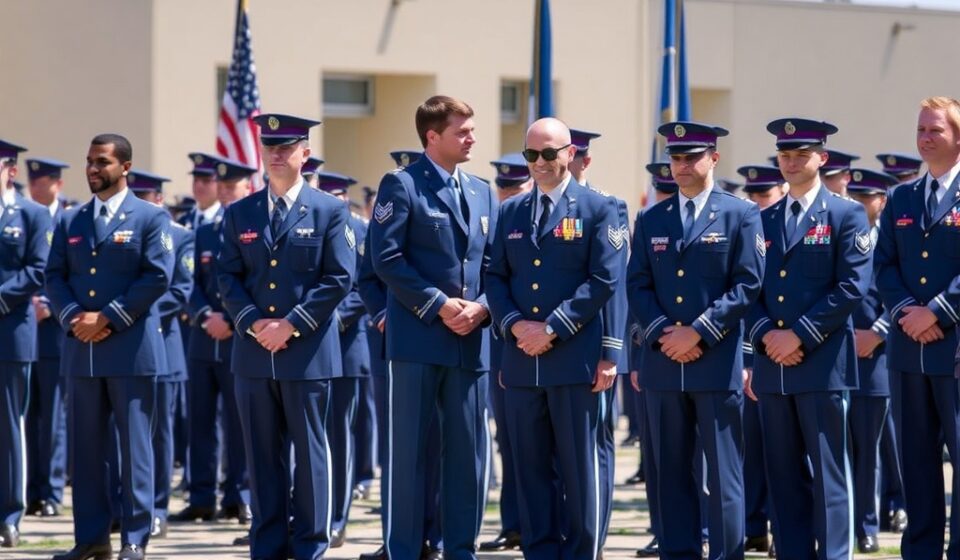

Air Force Academy Civilian Faculty Resignations: The United States Air Force Academy (USAFA) has long been revered as one of the nation’s premier institutions for developing future military leaders. Nestled in Colorado Springs, its iconic Cadet Chapel represents a blend of military discipline and academic rigor. However, beneath the surface of this prestigious institution, a crisis has been brewing.
Recent reports, internal surveys, and bipartisan political interventions have revealed a staggering wave of civilian faculty resignations and staff cuts that threaten to undermine the Academy’s core educational mission. With morale at an all-time low and leadership in flux, stakeholders—from lawmakers to cadets—are sounding the alarm.
This is the story of what is happening to the civilian workforce at the Air Force Academy, why it matters for national security, and what the future might hold.
The Scope of the Departures: More Than Just a Few Resignations
While the Air Force Academy initially characterized the staff reductions as minor adjustments, newly released data tells a much more dramatic story.
According to the Defense Organizational Climate Survey (DEOCS) conducted in late 2025, the number of employees reporting to the Dean of Faculty—including teaching faculty, research staff, lab technicians, and support personnel—plummeted from 895 to 759. This represents a loss of 136 positions, a reduction of over 15% in a single year.
This figure far exceeds the “net loss of six faculty members” suggested by the Academy in earlier public statements. Sources indicate that the exodus is ongoing.
Why Are They Leaving? The Perfect Storm
The mass exodus is not attributable to a single cause but rather a confluence of budget pressures, ideological shifts, and leadership turmoil.
1. A $10 Million Budget Shortfall
At the heart of the crisis is a significant financial gap. The Academy is facing a $10 million shortfall in civilian compensation. To bridge this gap, leadership initially proposed eliminating up to 140 positions, including 52 faculty and staff roles.
In response, Colorado Senators John Hickenlooper (D) and Representative Jeff Crank (R) sent a bipartisan letter to Air Force Secretary Troy Meink, urging the department to reprogram unobligated funds to cover the deficit. While lawmakers proposed a “Band-Aid” solution of $10 million, professors on the ground warn that one-time funding is insufficient to restore the institutional knowledge that has walked out the door.
2. Ideological Pressure and the “Warrior Ethos”
The cuts coincided with a broader Department of Defense push under the Trump administration to reshape military education. Defense Secretary Pete Hegseth openly advocated for fewer civilian professors, whom he accused of coming from “left-wing, woke universities,” and called for more uniformed personnel to teach.
The Academy responded by scrubbing its mission statement. The word “educate” was replaced with “forge,” signaling a shift from academic development to pure military training. Furthermore, the Academy dropped a minor in “Diversity and Inclusion Studies” and revised policies to require approval for presentations that touch on DEI topics—a move faculty decried as a violation of academic freedom.
3. A Collapse in Morale
The DEOCS survey quantified what many felt: morale has collapsed. A composite morale indicator for the Dean of Faculty dropped to 40% this year. In the Mechanical Engineering Department—a critical discipline for the Air Force—morale fell to a staggering 22%, down from over 50% the previous year.
A staggering 72% of staff reported that the organizational climate was worse than the previous year, with most placing the blame on factors “outside their department,” specifically targeting senior leadership above the Dean of Faculty.
Leadership Shake-Up: The Fallout
The turmoil has resulted in a significant upheaval at the top of the Academy’s command structure.
Impact on Cadets and Academic Programs
For the roughly 4,000 cadets attending the Academy, the faculty exodus is not just administrative news; it is a disruption to their education.
Loss of Expertise
Civilian faculty members are crucial to the Academy’s academic accreditation and research output. Civilians provide long-term continuity and specialized STEM expertise, unlike rotating military instructors. In the Mechanical Engineering department, faculty numbers are projected to drop from 24 to just 10, threatening the department’s viability.
Course Availability
There are genuine fears that the Academy may be forced to cut majors or minors.
The Future: Can the Academy Recover?
As the Academy looks to the 2026-2027 academic year, the path forward is fraught with challenges.
-
The Hiring Cycle: Universities typically conduct faculty interviews in the winter and send offers in the spring. Even if funding were magically restored today, the window to hire top-tier talent for the upcoming fall semester has largely passed.
-
The Need for a Provost: Experts like former visiting professor Tom Bewley argue that money alone isn’t the solution. He advocates for the creation of a long-term civilian Provost position. Similar to the Air Force Institute of Technology. To act as a check on the Superintendent and ensure academic continuity regardless of who is in the command chair.
-
Accreditation Concerns: The turmoil prompted an HLC review and nearly cost the Academy its accreditation, though the Academy says its accreditation was confirmed.
Conclusion: Air Force Academy Civilian Faculty Resignations
class=”ds-markdown-paragraph”>The civilian faculty resignations at the Air Force Academy represent a watershed moment for military education. The loss of 136 experienced educators, coupled with a toxic morale environment and a leadership vacuum, has left the institution at a crossroads.</p>
>Lawmakers have intervened, leaders have been ousted, and the faculty are speaking out.
Disclaimer: This article synthesizes information available as of March 2026. The situation regarding federal budgets and Department of Defense policy is subject to change.