
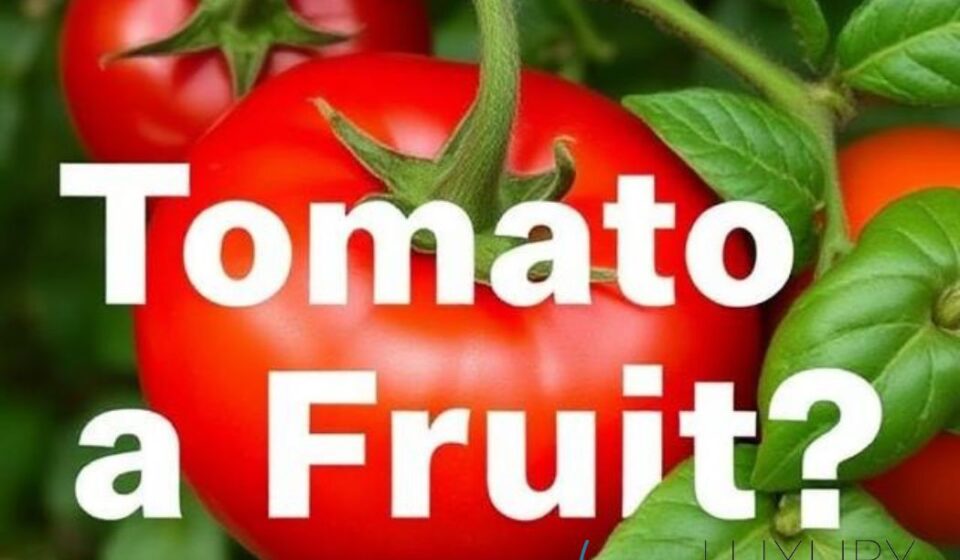

Picture this: It’s a warm summer evening, and you’re in the kitchen. You’ve got a plump, sun-ripened tomato on the counter, its skin taut and glossy. Your plan is to slice it up, drizzle it with a little olive oil, and sprinkle it with sea salt. As you reach for the knife, a friend chirps up with a smug grin: “You know, technically, that’s a fruit.”
In that moment, a wave of mild irritation washes over you. Is it a fruit? They’re right, aren’t they? Or is it a vegetable? You remember your grandmother calling it a vegetable. You’ve seen it next to the onions at the grocery store. The question, “is a tomato a fruit or a vegetable?” has sparked dinner table debates for generations, causing confusion and pedantry in equal measure.
But here’s the surprising truth: It is both, and the story of why is a fascinating journey through the worlds of botany, cooking, and even American legal history.
This article isn’t just about settling a trivia question. It’s about understanding the very language we use to talk about food. It’s a lens through which we can see the collision of science and culture. By the end, you’ll have the definitive answer, the perfect comeback for your next dinner party, and a deeper appreciation for this incredibly versatile—and nutritious—berry.
Table of Contents
ToggleDefining the Terms: What Makes a Fruit and What Makes a Vegetable?
Before we can answer the question, we need to define our terms. The confusion stems from the fact that the words “fruit” and “vegetable” mean different things depending on who you’re talking to: a botanist, a chef, or a tax collector.
The Botanical Truth: The Seed is the Key
In botany, the science of plants, the classification is absolute and based on the structure and function of the plant part. For a botanist, a fruit is the mature, seed-bearing ovary of a flowering plant. Its purpose is to protect the seeds and help with their dispersal. It develops from the flower’s ovary after fertilization.
This means that, botanically speaking, a fruit is a reproductive organ. If it has seeds and develops from a flower, it’s a fruit. Simple. What, then, is a vegetable? Strangely, in botanical terms, there is no strict definition for a “vegetable.” It’s a catch-all term for all the other edible parts of a plant: the roots (carrots, beets), stems (asparagus, celery), leaves (lettuce, spinach), and even flower buds (broccoli, cauliflower) .
The Culinary Perspective: It’s All About Flavor and Application
Ask a chef or a nutritionist, and you’ll get a completely different answer. In the culinary world, classification is based on flavor, texture, and how the food is used in the kitchen. Fruits are typically sweet or tart, with a soft, fleshy texture. They are often eaten raw, used in desserts, jams, or smoothies, or enjoyed as a snack.
Vegetables, on the other hand, have a less sweet, often savory or bitter flavor and a tougher texture. They are the stars of the main course, served in salads, soups, stews, and stir-fries . A chef will tell you a fruit is something you’re more likely to see in a pie, while a vegetable is something you’ll see next to the steak. This is why watermelon is a fruit and spinach is a vegetable.
Nutritionally, a similar logic applies. Sweeter, softer produce (often tree fruits) is grouped as “fruit,” while less-sweet, more savory produce is grouped as “vegetables.” According to the USDA’s MyPlate guidelines, which are designed for healthy eating, tomatoes are categorized as vegetables because they are most commonly consumed in savory applications and have a nutritional profile more like other vegetables.
The Tomato’s Place in the Botanical World
With the definition of a “botanical fruit” in hand, the answer is clear. A tomato is scientifically, indisputably a fruit. It develops from the ovary of a small yellow flower on the tomato vine. Inside, you’ll find numerous seeds, each capable of producing a new plant. This perfectly fits the botanical criteria.
A Berry? Yes, a Berry!
But we can get even more specific. In botanical terms, a tomato is not just any fruit; it’s a berry. A berry is a fleshy fruit produced from a single ovary. While we commonly think of berries as small, sweet, and seed-filled like blueberries or raspberries, the botanical definition is far more precise. A berry must have a fleshy pericarp (the wall of the fruit) and multiple seeds embedded in the fruit’s flesh.
The tomato checks all these boxes. The fleshy part we eat is the pericarp, and the jelly-like sacs inside hold the seeds. This makes the tomato, along with other surprising “berries” like bananas, eggplants, and avocados, a bona fide member of the berry club.
A Model Fruit for Science
The tomato’s fascinating biology has made it a star in the scientific community. Botanists and geneticists have adopted Solanum lycopersicum (the tomato’s scientific name) as a model organism for studying the development of fleshy fruits. In 2012, its genome was fully sequenced, giving researchers a genetic roadmap. This has allowed scientists to study the intricate hormonal and genetic changes that occur during fruit development—from the initial fruit set to the ripening process where the fruit transitions from a green, partially photosynthetic organ to a red, sweet, and aromatic one. It’s the lab rat of the fruit world, helping us understand not only tomatoes but all fleshy fruits.
The Culinary Reality: A Vegetable in the Kitchen
So, if science says it’s a fruit, why does almost everyone think of it as a vegetable? The answer lies in the tomato’s culinary profile.
Unlike a Granny Smith apple or a perfectly ripe peach, a tomato is not very sweet. Its flavor is savory, acidic, and deep with umami, the so-called “fifth taste.” It’s this savory quality, not a sugary one, that makes it a natural companion for garlic, onions, and olive oil. We roast them, turn them into pasta sauces, dice them into salsas, and slice them onto burgers.
The Supreme Court Weighs In: The Nix v. Hedden Case
The most famous resolution to the tomato debate came not from a scientist but from the highest court in the United States. In the late 19th century, the Tariff Act of 1883 placed a 10% tax on imported vegetables. Fruits, however, were tax-free. A tomato importer, John Nix, sued the tax collector, Edward Hedden, arguing that since tomatoes were botanically fruits, they shouldn’t be taxed as vegetables.
The case went all the way to the Supreme Court. In 1893, the court issued a unanimous ruling. The justices didn’t care about the botanical definition. They focused on the common, everyday understanding of the words. They determined that tomatoes were commonly used as vegetables in the kitchen, eaten as part of the main course, and therefore should be classified as a vegetable for the purposes of trade and taxation. This legal ruling cemented the tomato as a vegetable in the public’s mind, despite the scientific facts.
The Balanced Verdict: Why It’s Both
So, what’s the definitive answer to our original question? Is a tomato a fruit or a vegetable?
The answer is both.
-
To a botanist, it is a fruit (specifically, a berry).
-
To a chef, a nutritionist, or the U.S. Supreme Court, it is a vegetable.
The tomato is a perfect example of how our language and systems of classification can differ depending on our context. A scientist is interested in the biology and reproduction of a plant. A cook is interested in its flavor and utility in a meal. Both classifications are correct and valid.
Other Identity-Crisis Foods
The tomato is far from alone. Many other foods we call “vegetables” are, in fact, botanical fruits. Next time you’re in the produce aisle, consider that:
-
Peppers (bell, chili, jalapeño) are fruits.
-
Cucumbers are fruits.
-
Eggplant is a fruit.
-
Squash and zucchini are fruits.
-
Avocados are fruits.
-
Green beans and pea pods are fruits, as they are the seed-bearing structures of the plant.
Conversely, some foods we think of as fruits are not botanically fruits at all. Rhubarb is a vegetable (a stem) that is famously used in desserts. Strawberries are also not true berries; they’re an “aggregate accessory fruit” because the fleshy part comes from the receptacle of the flower, not the ovary.
A Closer Look at the World’s Favorite Berry
In 2019, the world produced over 182 million tons of tomatoes. They are the second most important fruit or vegetable crop in the world, second only to potatoes. They are grown in virtually every country, both for fresh consumption and for processing into products like ketchup, tomato paste, and canned tomatoes. The sheer volume of the tomato industry underlines the importance of this humble fruit. And within that industry, a crucial distinction is made between the different species.
The Solanum Family Tree
To truly understand a tomato, we need to look at its family tree. The tomato, Solanum lycopersicum, belongs to the nightshade family, Solanaceae. This family includes other commercially important crops like potatoes, peppers, and eggplants, as well as some highly toxic plants like deadly nightshade and tobacco.
This connection to a family of poisonous plants has a storied history. European colonists were suspicious of tomatoes for centuries, believing them to be poisonous. This fear likely stemmed from the visual similarity of the tomato plant to its toxic cousins. In fact, the tomato’s scientific name has itself been a subject of debate.
In the 1700s, the famous botanist Carl Linnaeus placed the tomato in the Solanum genus. But another botanist, Philip Miller, argued it deserved its own genus, Lycopersicon, fearing that its association with the nightshades would taint its reputation. He was right, and the name Lycopersicon esculentum (“edible wolf peach”) stuck for centuries. However, with the advent of modern genetics, scientists have definitively placed the tomato back in the Solanum genus, demonstrating that its proximity to its poisonous relatives is more than skin deep. This isn’t just ancient history. Today, we know that tomatoes share genetic and metabolic pathways with the rest of the nightshade family.
The Powerhouse Within: Nutritional Benefits
Beyond the debate, the tomato is a nutritional powerhouse, regardless of whether you call it a fruit or a vegetable. It is a great source of essential vitamins and minerals, particularly:
-
Vitamin C
-
Vitamin A
-
Vitamin K
-
Potassium
-
Folate
It is also rich in beneficial plant compounds, the most famous of which is lycopene. Lycopene is a powerful antioxidant responsible for the tomato’s red color and is linked to numerous health benefits. Studies suggest it can reduce inflammation, improve heart health by lowering LDL (bad) cholesterol and blood pressure, and even protect against certain types of cancer. Interestingly, cooking tomatoes with a little fat (like olive oil) makes the lycopene more bioavailable and easier for your body to absorb.
The Final Cut
So, the next time someone at the dinner table tries to win the argument with the botanical fact that a tomato is a fruit, you can smile and reply, “Well, yes, but only in the same way a banana is a berry. But in my kitchen, and according to the Supreme Court, it’s a vegetable.” You’ll have the full story, from the flower to the Supreme Court, and a deep appreciation for this versatile food that refuses to be boxed into one simple category.
Here are the key takeaways:
-
Botanically: A tomato is a fruit. More specifically, it is a berry. This is because it develops from the ovary of a flower and contains seeds.
-
Culinarily: A tomato is a vegetable. This is because it has a savory flavor profile and is used in main courses, not desserts.
-
Historically: The 1893 U.S. Supreme Court case Nix v. Hedden legally classified the tomato as a vegetable for taxation purposes, based on its common culinary use.
-
Nutritionally: It doesn’t matter what you call it! Tomatoes are a rich source of vitamins, minerals, and antioxidants, particularly lycopene, which are essential for a healthy diet.
-
The Tomato Relatives: The tomato is a member of the Solanaceae family (nightshades) and is a close relative of potatoes, peppers, and eggplants. All of these are also botanical fruits.
Frequently Asked Questions (FAQs)
1. Is a tomato a fruit or a vegetable?
It’s both. Botanically, it is a fruit. Culinarily and legally, it is considered a vegetable.
2. Why is a tomato a berry?
Botanically, a berry is a fleshy fruit with multiple seeds that develops from a single ovary. The tomato fits this definition perfectly, with its fleshy interior and many seeds.
3. What was the Supreme Court’s decision on tomatoes?
In 1893, the U.S. Supreme Court ruled in Nix v. Hedden that tomatoes should be classified as vegetables for customs and taxation purposes due to their common culinary use in main meals.
4. What other foods are botanically fruits but used as vegetables?
Many! This includes peppers, cucumbers, eggplants, squash, avocados, and green beans.
5. Does how I use a tomato change what it is?
For a cook or a nutritionist, yes. Its use and flavor profile place it in the vegetable category in the kitchen. For a botanist, no. Its biological structure always defines it as a fruit.
6. Are tomatoes good for you?
Yes. They are an excellent source of vitamin C, potassium, and the antioxidant lycopene, which is linked to heart health and a reduced risk of cancer.
7. What is the scientific name for a tomato?
The scientific name is Solanum lycopersicum.
8. Why were tomatoes once thought to be poisonous?
Tomatoes belong to the nightshade family, Solanaceae, which includes several poisonous plants. This made early Europeans suspicious, causing them to avoid eating tomatoes for centuries.
Sources
-
European Food Information Council (EUFIC). “Is a Tomato a Fruit or a Vegetable and Why?”
-
UC Davis, Plant Biology. “Tomato Fruit Anatomy.”
-
Britannica. “Tomato.”
-
Healthline. “Is a Tomato a Fruit or a Vegetable?”
-
UC Davis, Plant Biology. “Tomato Fruit Development.”
-
University of Maine Cooperative Extension. “Ask EFNEP: Is a Tomato a Fruit or a Vegetable?”
-
Times of India. “Is tomato a fruit or vegetable?”
-
Fine Dining Lovers. “Why is Tomato Considered a Fruit?”
-
Frontiers in Plant Science. “Tomato Fruit Development and Metabolism.”
-
University of Georgia Extension. “When is a vegetable really a fruit?”
-
Southern Living. “Is A Tomato A Fruit Or A Vegetable?”
-
Let’s Talk Science. “Tomato Taxonomy.”
Tags:
is a tomato a fruit
admin
M Umer Abbasi is a luxury lifestyle journalist and editorial curator specializing in haute horology, passion investments, and avant-garde design. With an eye for flawless craftsmanship and heritage storytelling, he deconstructs the world of high-ticket assets—from secondary watch market trends to the evolution of bespoke tailoring. His work focuses on shifting the luxury narrative away from fleeting trends and toward timeless design, raw materials, and true artisanship.