
Imagine this: you’re standing in a jewelry showroom, surrounded by countless glittering diamonds. Your eyes are drawn to a ring that seems to possess a unique blend of classic sparkle and contemporary elegance. It’s an oval cut. What is it about this specific shape that makes it feel so different from the rest?
You’re not alone. Oval engagement rings have become a defining choice for a generation of couples looking for something that feels both fresh and timeless. The beauty of the oval lies in its duality. It’s a shape that is steeped in a relatively modern history but feels like it has been a classic for centuries. It offers the brilliant fire of a round diamond while creating an elegant, finger-lengthening silhouette that many find instantly appealing.
This guide is designed to be your comprehensive compass in the world of oval engagement rings. Whether you are just beginning your search or are ready to make a purchase, we will delve into the nuances of the cut, understand its unique characteristics, and explore why it remains a favorite in 2026.
Table of Contents
ToggleThe Background: The Modern History of a Timeless Cut
While the allure of the oval shape in gemstones has existed for centuries, the specific oval cut we recognize today was perfected relatively recently. It’s a creation of 20th-century diamond craftsmanship. In the late 1950s, the legendary cutter Lazare Kaplan engineered a brilliant faceting pattern that truly unlocked the oval’s potential for sparkle.
The goal was simple yet revolutionary: create a diamond that had all the fire and brilliance of a round brilliant cut but in a more distinctive, elongated form. The result was a perfect compromise—a stone that was classic enough for traditionalists but unique enough for those seeking a modern edge. This innovation laid the groundwork for the oval’s rise from a niche choice to the mainstream phenomenon it is today.
What Makes Oval Cuts Special? The Unique Appeal
So, what exactly makes this shape so compelling? It goes far beyond just aesthetics.
A Flattering Illusion: The Finger-Lengthening Effect
One of the most lauded benefits of an oval cut is its ability to make the wearer’s fingers appear longer and more slender. The elongated silhouette draws the eye along the length of the finger, creating a graceful, slimming effect that is universally flattering. This makes it a fantastic option for a wide range of hand shapes and ring sizes.
Maximum Sparkle: The Brilliant-Cut Advantage
Unlike step cuts like emerald or Asscher, which play with light and clarity in a more subtle way, the oval is a brilliant cut. This means it possesses the same faceting style as the classic round diamond, maximizing its ability to reflect light and deliver exceptional sparkle. This is a key reason why it’s often the first choice for those who prioritize an active, fiery brilliance in their diamond.
Perceived Size and Value
Thanks to its elongated shape, an oval diamond often appears larger than a round diamond of the same carat weight. Some estimates suggest an oval can look 10 to 15% larger face-up than a round of equal weight. This provides a tangible advantage for those who want a diamond with substantial visual presence without increasing their carat and budget.
How to Evaluate an Oval Diamond
Buying a diamond requires knowledge. When it comes to fancy shapes like the oval, the rules of evaluation have some unique twists.
The Bow-Tie Effect
This is the single most important factor to consider when choosing an oval diamond. The bow-tie effect appears as a dark shadow across the center of the stone, resembling, as the name suggests, a bow tie. It is caused by light leakage where the facets don’t perfectly reflect light back to the viewer’s eye.
While almost all oval diamonds exhibit some degree of a bow-tie, the key is to find one where it is minimal. A well-cut stone will have a faint, almost imperceptible shadow, while a poorly cut one will have a dark, prominent area that seriously detracts from its beauty. The best advice is to view the diamond in person, in various lighting conditions, to see how the light moves across the stone.
Length-to-Width Ratio
Every oval diamond is different. The length-to-width ratio determines the personality of the shape.
-
Traditional Shape: A ratio between 1.3 and 1.5 is generally considered the “sweet spot” for a classic oval that is neither too round nor too elongated.
-
Rounder Feel: A lower ratio (closer to 1.2) will result in a plumper, rounder appearance.
-
Dramatic Elongation: A higher ratio (closer to 1.6 or above) creates a sleeker, more dramatic, and modern silhouette.
As Blake Asaad, founder of Goodstone, suggests, higher length-to-width ratios can be very appealing for a little extra elongation.
Color and Clarity
-
Color: While brilliant cuts like ovals are good at masking some imperfections, the elongated shape can show color slightly more than a round brilliant. If a colorless look is your priority, aim for a diamond in the D-F range. For a more budget-friendly option that still appears bright, G-H grades are a popular and excellent choice.
-
Clarity: The brilliant faceting of an oval is your friend here. It does an excellent job of hiding inclusions, which means you can often safely opt for a lower clarity grade like VS2 or SI1 without compromising the stone’s eye-clean appearance.
The Perfect Setting: Showcasing Your Oval
One of the best things about oval diamonds is their versatility. They pair beautifully with a wide range of settings.
-
Solitaire: The classic choice. A simple, clean band allows the oval’s elongated shape and sparkle to take center stage. It feels fresh, modern, and understatedly elegant.
-
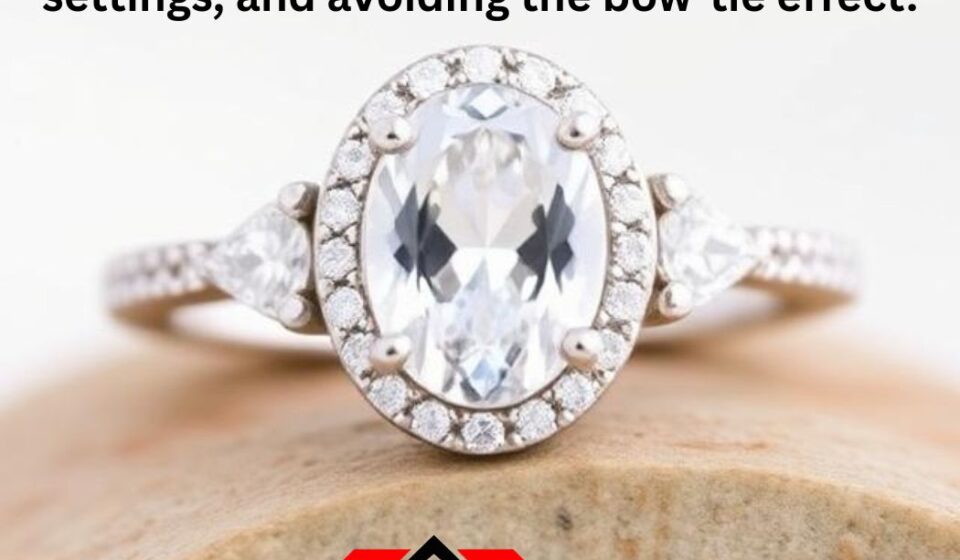
Halo: A halo of smaller diamonds surrounding the center stone can enhance the overall size and add incredible brilliance. This setting magnifies the oval’s visual impact.
-
Three-Stone: A three-stone setting with an oval center is a beautiful way to add more width and shine. Side stones like pears or trapezoids can contrast with and accentuate the oval’s shape.
-
East-West Setting: For a truly modern, edgy look, consider an East-West setting where the diamond is placed horizontally across the band. This orientation is gaining significant popularity in 2026 for its unexpected symmetry and contemporary feel.
-
Bezel Setting: A bezel setting, where a thin metal rim encircles the diamond, offers a sleek, modern look and provides superior security, protecting the stone from chipping.
The Great Debate: Natural vs. Lab-Grown
The choice between a natural or lab-grown diamond is a personal one, and the oval shape is stunning in both.
-
Natural Diamonds: These are the product of a billion-year-old geological journey. Their rarity and connection to Earth’s history are a draw for many. They are the traditional choice, often seen as heirlooms with an intrinsic, enduring value.
-
Lab-Grown Diamonds: Created in a lab, these diamonds are chemically and physically identical to natural ones, often at a lower price point. This allows buyers to choose a larger oval diamond and a more intricate setting for the same budget. In 2026, lab-grown diamonds, especially in larger sizes (2 carats+), are a dominant trend.
From a cutting perspective, both natural and lab-grown ovals can be beautiful. As expert Jenny Chung Seeger points out, lab-grown diamonds allow for more experimentation with proportions due to predictable rough, while natural diamonds are shaped to minimize waste from the original crystal.
Trends, Predictions, and Practical Tips
What Does 2026 Have in Store?
The oval engagement ring shows no signs of fading. In fact, it remains the number-one choice for many couples. Key trends for 2026 include:
-
Bigger is Better: Lab-grown diamonds are making larger stones (over 2 carats) more accessible, and the oval is a favorite for maximizing this visual impact.
-
Unique Settings: The classic solitaire is being joined by more sculptural settings, hidden halos, and the modern East-West orientation.
-
Personalized Designs: Couples are moving towards custom rings that tell their unique story, whether that involves using mixed metals, colored side stones, or vintage-inspired details.
Common Mistakes + How to Avoid Them
-
Overlooking the Bow-Tie: Don’t get so swept up in the shape’s beauty that you forget to assess the bow-tie effect. View the stone in natural, incandescent, and fluorescent light to see how it performs.
-
Choosing the Wrong Proportions: A ratio that is too high or too low will change the entire look of the ring. Know the difference between a classic look (1.3-1.5) and a more dramatic one before you buy.
-
Prioritizing Carat Over Cut: Because the GIA doesn’t provide a cut grade for fancy shapes, the visual performance of the cut is paramount. A well-cut oval will always be more beautiful and brilliant than a larger, poorly cut one.
-
Opting for a Very Thin Band: While popular, very thin bands (under 1.8mm) are more prone to warping and breaking. A slightly wider band provides more durability while complementing the larger stone sizes currently trending.
Conclusion & Key Takeaways
The oval engagement ring is more than just a trend; it’s a symbol of a modern classic. It combines the best of tradition and innovation, offering the brilliant sparkle of a round diamond with a uniquely flattering, elongated silhouette. As we move through 2026, its popularity continues to grow, fueled by its versatility and the increasing accessibility of high-quality lab-grown stones.
Key Takeaways
-
The Look: A brilliant-cut diamond that offers exceptional sparkle and a flattering, finger-lengthening shape.
-
The Price: Often less expensive than a comparable round cut, offering better value for its visual size.
-
The Bow-Tie: A common feature where a dark shadow appears across the center. Always inspect the diamond in person to ensure this is minimal.
-
The Ratio: Aim for a length-to-width ratio between 1.3 and 1.5 for a classic, balanced look.
-
The Setting: This shape is incredibly versatile. It shines in solitaires, halo settings, three-stone designs, and modern East-West settings.
-
The Future: The oval is a dominant trend in 2026, with lab-grown diamonds enabling larger, more personalized designs.
Choosing an engagement ring is a deeply personal journey. Whether you are drawn to the oval’s brilliant sparkle, its sophisticated elongation, or its perfect balance of modern and timeless, it is a shape that is sure to captivate and inspire for a lifetime.
Keywords: oval engagement rings, oval diamond, oval engagement ring styles, bow-tie effect, best engagement ring settings, buying an oval diamond, 2026 engagement ring trends, lab-grown diamonds, fancy shape diamonds.
Frequently Asked Questions (FAQs)
1. Are oval engagement rings more expensive than round diamonds?
No. Oval diamonds are often priced 10-30% less than round brilliant diamonds of the same carat weight, making them a great value for a similar sparkle.
2. Is the “bow-tie effect” a dealbreaker?
Not necessarily. While present in almost all ovals, a well-cut stone will minimize it to the point where it’s barely noticeable. It’s all about viewing the diamond in person to see if the effect is subtle enough for your taste.
3. What is the best setting for an oval cut diamond?
An oval is incredibly versatile, but the most popular settings are the classic solitaire, the brilliant-enhancing halo, and the modern East-West setting. Your personal style should be the biggest deciding factor.
4. What color and clarity should I look for?
A good rule of thumb for an oval is to prioritize cut quality. For color, aim for a G-H grade for a bright white look without the premium of D-F. For clarity, VS2-SI1 will often be “eye-clean” thanks to the brilliant faceting that hides inclusions.
5. Will an oval engagement ring look good on my hand?
Yes! The elongated shape is one of the most universally flattering cuts as it has a natural slimming effect on the finger, making it look longer and more elegant.
Sources
-
Vogue. (2026, March 16). Oval Engagement Rings: What to Know About the Timeless Cut.
-
Natural Diamonds. (2025, May 20). Oval Engagement Rings Guide: What Makes Them So Popular.
-
The Knot. (2025, November 4). Your Guide to Oval Engagement Rings.
-
Austen & Blake. (2026). Why Choose Oval Cut Rings in 2026.
-
Ritani. (2025, June 30). Diamond Shapes Explained.
-
The Diamond Store. (2026, January 7). What is an oval cut diamond?
-
International Gem Society (IGS). (2018, September 23). Oval Cut Diamond Buying Guide.
-
Diamond Nexus. (2024, July 30). Oval Cut Diamonds Pros and Cons.
-
Weston Jewelers. (2026, February 24). Engagement Ring Styles for 2026.
-
Rare Carat. (2026). 2026 Engagement Ring Trends: What Will Define the Year Ahead.
-
Nine. (2025, December 31). Engagement ring trends we’ll see in 2026 – and the ones we’ll leave behind.
Tags:
oval engagement rings
admin
M Umer Abbasi is a luxury lifestyle journalist and editorial curator specializing in haute horology, passion investments, and avant-garde design. With an eye for flawless craftsmanship and heritage storytelling, he deconstructs the world of high-ticket assets—from secondary watch market trends to the evolution of bespoke tailoring. His work focuses on shifting the luxury narrative away from fleeting trends and toward timeless design, raw materials, and true artisanship.