
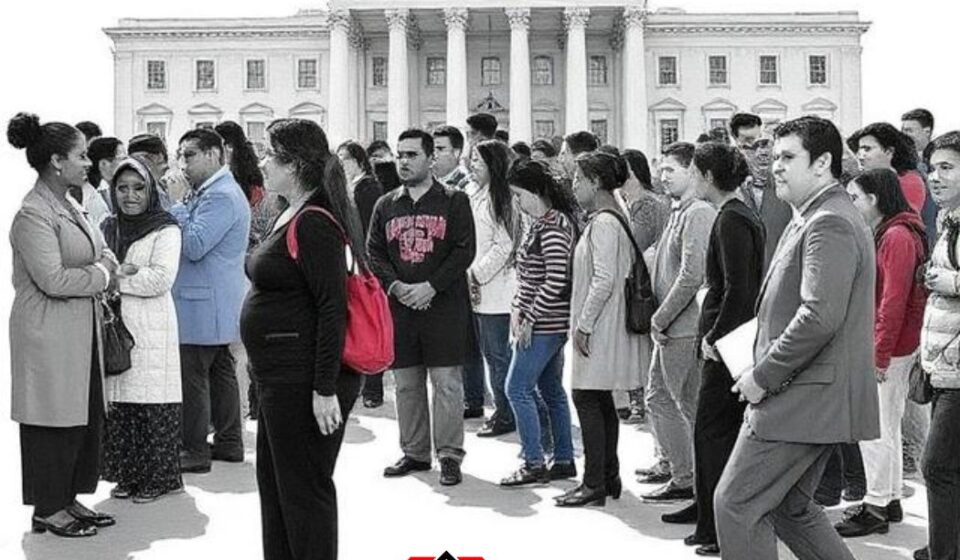

Judge Orders 12000 Refugees: In a significant legal setback for the Trump administration, a federal judge in Seattle has ordered the government to admit approximately 12,000 refugees into the United States. The ruling sharply rejects the administration’s effort to limit entries to just 160 people, delivering a decisive blow to the White House’s sweeping suspension of the nation’s refugee program.
Table of Contents
ToggleThe Background: Trump’s Refugee Ban
On January 20, 2025, the day he began his second term, President Donald Trump signed Executive Order No. 14163, titled “Realigning the United States Refugee Admissions Program.” The order indefinitely suspended all refugee admissions under the U.S. Refugee Admissions Program (USRAP), a congressionally established system that has operated since the Refugee Act of 1980 to resettle people fleeing war, persecution, and natural disasters — a process that typically takes years and involves extensive vetting. The move halted travel for thousands of refugees who had already been approved for resettlement and left many stranded abroad after they had sold their homes, quit their jobs, and upended their lives in reliance on U.S. government promises.
The suspension triggered an immediate legal challenge. Three major refugee aid organizations — HIAS, Church World Service, and Lutheran Community Services Northwest — along with nine individual refugees filed a lawsuit known as Pacito v. Trump, arguing that the executive order unlawfully nullified the system Congress established for refugee admissions.
The 12,000 vs. 160 Dispute
In February 2025, U.S. District Judge Jamal Whitehead — a 2023 appointee of former President Joe Biden — issued a preliminary injunction blocking enforcement of Trump’s order, stating it amounted to an “effective nullification of congressional will”. The 9th U.S. Circuit Court of Appeals largely put that decision on hold in March 2025, but with a critical exception: the government had to continue processing refugees who, before January 20, had “arranged and confirmable” travel plans to the United States. The appeals court reasoned that such people had “relied on promises made by the federal government that they would be admitted”.
What followed was a fierce legal battle over who exactly qualified under that exception. The Justice Department estimated that only 160 refugees met the criteria — specifically, those with travel scheduled within two weeks of January 20. Refugee aid organizations, by contrast, argued the proper number was closer to 12,000 people who had conditionally approved applications and confirmed travel arrangements, regardless of their scheduled arrival date.
In a status conference before Judge Whitehead, the two sides presented their competing interpretations. The judge firmly sided with the refugees.
Judge Whitehead’s Ruling: A Stinging Rebuke
On Monday, May 5, 2025, Judge Whitehead issued a comprehensive order directing the Trump administration to process, admit, and provide resettlement support services to the approximately 12,000 refugees covered by the appeals court’s exception.
The ruling was notable not only for its legal force but also for the judge’s blunt and colorful language. Whitehead rejected the government’s interpretation as “interpretive jiggery-pokery of the highest order” — a phrase originally popularized by the late Supreme Court Justice Antonin Scalia in reference to dubious legal reasoning. The judge added that the government’s analysis required “not just reading between the lines of the 9th Circuit‘s ruling, but hallucinating new text that simply is not there”.
Whitehead took particular aim at the administration’s attempt to impose a two-week limitation on travel arrangements, noting that the appeals court had set out only three clear criteria — an approved refugee application, cleared travel status, and confirmable travel plans — without any mention of timing. “Had the Ninth Circuit intended to impose a two-week limitation — one that would reduce the protected population from about 12,000 to 160 individuals — it would have done so explicitly,” Whitehead wrote.
The ruling was unequivocal: “This court will not entertain the government’s result-oriented rewriting of a judicial order that clearly says what it says. The government is free, of course, to seek further clarification from the Ninth Circuit. But the government is not free to disobey statutory and constitutional law — and the direct orders of this court and the Ninth Circuit — while it seeks such clarification”.
The Pullback
The legal battle did not end there. The Justice Department promptly sought clarification from the 9th Circuit, and on May 9, 2025, the appeals court issued a second order. This time, the court instructed that the exception should be interpreted “narrowly, on a case-by-case basis” to apply to individuals with a strong reliance interest — comparable to that of the lead plaintiff, an anonymous refugee known as Pacito.
Pacito, a refugee from the Democratic Republic of the Congo, had been approved for resettlement and scheduled to travel with his family on January 22, 2025. When Trump signed the executive order, Pacito found himself stranded with his wife and baby in the parking lot of the U.S. embassy in Nairobi. The appeals court pointed to his situation as the benchmark for qualifying refugees.
On May 15, 2025, Judge Whitehead reluctantly rescinded his earlier order. In a four-page ruling, he acknowledged that under the 9th Circuit’s clarification, only the 160 refugees the government had identified would be automatically covered. “The government must process, admit, and provide statutorily mandated resettlement support services to these Injunction Protected Refugees immediately,” Whitehead wrote. However, he also ordered the appointment of a special master to evaluate the thousands of other refugees on a case-by-case basis to determine whether they, too, qualified for admission under the “strong reliance interest” standard.
March 2026: The Ninth Circuit’s Final Word
The legal saga concluded in March 2026, when a three-judge panel of the 9th Circuit issued its final ruling in Pacito v. Trump. The panel affirmed in part and reversed in part the district court’s preliminary injunctions. Crucially, the court largely reversed the order requiring continued refugee processing and admissions, agreeing with the administration that the president has broad statutory authority to suspend refugee admissions under federal law.
However, the appeals court did affirm one important component: the government must continue funding domestic resettlement services for refugees already in the United States. The decision effectively upheld the indefinite suspension of the USRAP while preserving support for refugees who had already been resettled.
Broader Impact
The March 2026 ruling left the U.S. refugee admissions system in a drastically reduced state. For Fiscal Year 2026, the administration set the refugee admissions cap at just 7,500. That is the lowest ceiling in U.S. history. It was down from 125,000 under the previous administration. Routine admissions have effectively ceased. Admissions now occur only through narrow, case-by-case exceptions. Some refugees also enter if they belong to a small court-protected group. Additionally, the administration prioritized resettling Afrikaners from South Africa.
It also prioritized others facing “unjust discrimination” under Executive Order 14204. This was a departure from the program’s longstanding rules. Previously, the program relied on U.N. referrals and humanitarian categories. Refugee aid organizations expressed deep disappointment. “Today’s order from the Court of Appeals removes the ability to safely resettle refugees stranded by the refugee ban, or even process their cases, while President Trump’s cruel ban continues,” said Mevlüde Akay Alp, a senior litigation attorney with the International Refugee Assistance Project. HIAS CEO Beth Oppenheim added, “Today’s decision makes a pathway to safety even less attainable for tens of thousands of people”.
Conclusion
Judge Jamal Whitehead’s May 2025 order — and its forceful rejection of the government’s interpretation as “interpretive jiggery-pokery” — stands as a striking moment in the ongoing legal battle over U.S. refugee policy. The court reduced refugee admissions from 12,000 to 160. But the case exposed deep tensions. These tensions exist between executive authority and congressional intent. The U.S. government had also made promises to vulnerable people. Those people had upended their lives. They relied on American protection.
The Pacito v. Trump litigation affirmed the president’s broad power over refugee admissions while also ensuring that those already inside the United States would not be abandoned. For the thousands left stranded abroad, the ruling marked the effective end of a pathway that once offered hope — a sobering conclusion that may define U.S. refugee policy for years to come.
FAQs: Judge Orders 12,000 Refugees – The Pacito v. Trump Case
1. What did the judge order in May 2025?
Judge Jamal Whitehead ordered the government to admit about 12,000 refugees. He said the White House could not limit admissions to just 160 people. He called the government’s reasoning “interpretive jiggery-pokery.”
2. What was Trump’s refugee ban?
President Trump signed Executive Order 14163 on January 20, 2025. It indefinitely suspended the U.S. Refugee Admissions Program (USRAP). Thousands of approved refugees were stranded abroad. Many had already sold homes and quit jobs.
3. Who sued to stop the ban?
Three major refugee aid organizations sued: HIAS, Church World Service, and Lutheran Community Services Northwest. Nine individual refugees joined them. The case was called Pacito v. Trump.
4. Why did the dispute over 12,000 vs. 160 happen?
The 9th Circuit allowed refugees with “confirmable travel plans” before January 20 to still enter. The government said only 160 people qualified. Refugee groups said the real number was 12,000. Judge Whitehead agreed with the groups.
5. What did the 9th Circuit say later?
On May 9, 2025, the appeals court clarified its order. It said the exception must be applied “narrowly, on a case-by-case basis.” It used a stranded refugee named Pacito as the benchmark. Pacito was stuck in Nairobi with his family.
6. Did Judge Whitehead change his order?
Yes, on May 15, 2025, he rescinded his 12,000-person order. He said the 9th Circuit’s clarification meant only the 160 government-identified refugees were automatically covered. He appointed a special master to review others individually.
7. What was the final ruling in March 2026?
A 9th Circuit panel ruled largely in favor of the administration. It said the president has broad power to suspend refugee admissions. It upheld the ban. But it required continued funding for resettlement services for refugees already in the U.S.
8. What is the status of the refugee program now?
The program is drastically reduced. The FY2026 cap is only 7,500 admissions – the lowest ever. Routine admissions have stopped. Only narrow, case-by-case exceptions exist. The administration also prioritizes certain groups like Afrikaners from South Africa.
9. How did refugee organizations react to the 2026 ruling?
They were deeply disappointed. One attorney said the ruling “removes the ability for stranded refugees to be safely resettled.” The CEO of HIAS said it makes safety “even less attainable for tens of thousands of people.”
10. What is the key takeaway from this case?
The president has broad legal authority over refugee admissions. Courts can check extreme interpretations but will respect executive power. Promises made to refugees may not be enforceable if policy changes. Over 11,000 people lost their expected pathway to the U.S.
This article is for informational purposes only and does not constitute legal advice. Laws and policies regarding immigration and refugee admissions are subject to change. Consult a qualified immigration attorney for advice on individual cases.

admin
M Umer Abbasi is a luxury lifestyle journalist and editorial curator specializing in haute horology, passion investments, and avant-garde design. With an eye for flawless craftsmanship and heritage storytelling, he deconstructs the world of high-ticket assets—from secondary watch market trends to the evolution of bespoke tailoring. His work focuses on shifting the luxury narrative away from fleeting trends and toward timeless design, raw materials, and true artisanship.