
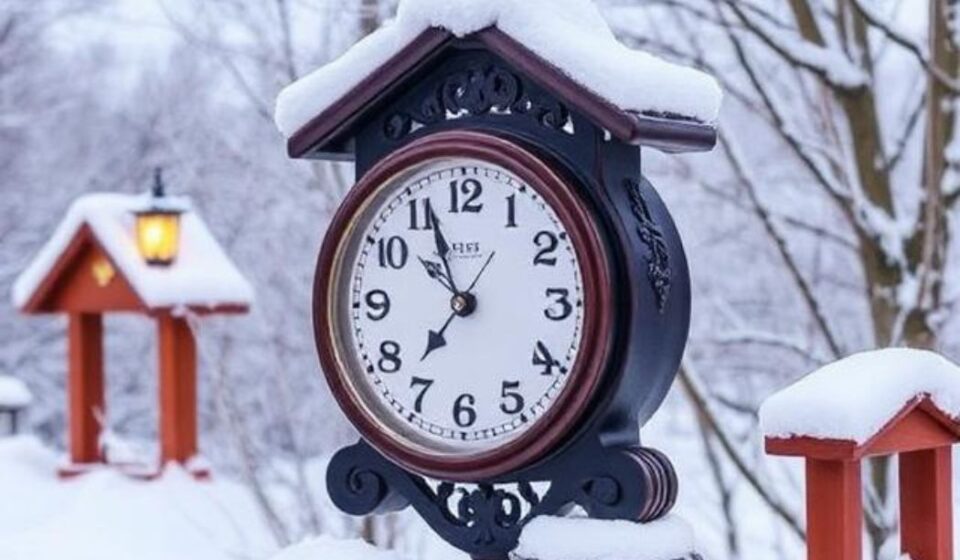

Horario de invierno means “winter schedule.” It is when we set clocks back one hour.
This happens every autumn. It gives us more morning light. But evenings get darker earlier.
Let’s explain everything. Short sentences. No fluff.
What Is Horario de Invierno?
Horario de invierno is standard time. We use it during the colder months.
In summer, we use horario de verano. That is daylight saving time.
In winter, we return to normal time. We “fall back” one hour.
For example:
-
Summer time: 7:00 PM sunset.
-
Winter time: 5:00 PM sunset.
You gain one hour of sleep. But you lose evening light.
When Does Horario de Invierno Start?
The date changes by country. Most of Europe and North America follow rules.
In the European Union:
-
Last Sunday of October.
-
Clocks go back at 01:00 UTC.
In the United States and Canada:
-
First Sunday of November.
-
Clocks go back at 02:00 local time.
After that date, horario de invierno stays until spring.
Why Do We Use Horario de Invierno?
The main reason is energy savings. More morning light means less artificial light.
People wake up earlier in winter. An extra hour of morning sun helps.
Farmers and schools also prefer it. Children go to school in daylight.
But not everyone agrees. Some countries want to stop changing clocks.
The European Parliament voted to end it. But no final decision yet.
Mexico already removed daylight saving time in 2023. They keep horario de invierno all year.
Pros and Cons of Horario de Invierno
Pros
-
You get one more hour of sleep.
-
Mornings are brighter. Safer for drivers and kids.
-
Your body clock matches the sun better.
-
Less eye strain in the early morning.
Cons
-
Evenings get dark too early.
-
Outdoor activities after work are harder.
-
Some people feel sad (seasonal depression).
-
Digital devices need manual updates sometimes.
How to Adjust to Horario de Invierno?
Adjusting takes a few days. Use these simple tips.
1. Change clocks before bed
Set your analog clocks on Saturday night. Your phone does it automatically.
2. Go outside in the morning
Natural light resets your body clock. Take a 15-minute walk.
3. Avoid late caffeine
Coffee after 3 PM makes sleep harder. Switch to herbal tea.
4. Keep a steady bedtime
Go to bed at the same time every night. Even on weekends.
5. Use bright lights in the evening
Combat early darkness with warm indoor lamps. It helps your mood.
Which Countries Use Horario de Invierno?
Most of Europe uses it.
Most of North America uses it.
Parts of South America and Australia use it too.
But many countries do not change clocks at all.
No winter time change in:
-
Japan
-
India
-
China
-
Russia (since 2014)
-
Most African nations
Check your local rules. Some regions are exceptions.
Conclusion
Horario de invierno is simple. Turn clocks back one hour. Enjoy one more hour of sleep.
Mornings become brighter. Evenings become darker. That is winter life.
Use our tips to adjust quickly. And remember to change your clocks on the right date.
Do you prefer winter time or summer time? Leave a comment below.
Detailed FAQs
1. What exactly is horario de invierno?
Horario de invierno is standard time. It is the natural time based on the sun’s position. We use it from late autumn to early spring. During this period, clocks are set back one hour compared to summer time. This means noon is closer to when the sun is highest in the sky.
2. How does horario de invierno differ from horario de verano?
Horario de verano is summer time. We move clocks forward one hour in spring. Horario de invierno is winter time. We move clocks back one hour in autumn. Summer time gives longer evenings. Winter time gives brighter mornings. The difference is exactly one hour.
3. When does horario de invierno start in Europe?
In the European Union, it starts on the last Sunday of October. Clocks go back at 01:00 UTC. For example, in 2025, that is October 26. In 2026, it is October 25. Always check the current year. Most European countries follow this rule.
4. When does horario de invierno start in the United States?
In the US, it starts on the first Sunday of November. Clocks go back at 02:00 local time. For example, in 2025, that is November 2. In 2026, it is November 1. Canada follows the same dates. Exceptions exist for some territories.
5. Do I gain or lose one hour of sleep?
You gain one hour. On the change day, at 02:00, the clock becomes 01:00 again. You can sleep that extra hour. Most people feel more rested the next morning. But your evening gets darker one hour earlier.
6. Why do we still use horario de invierno?
The main reason is energy saving. Morning sunlight reduces artificial lighting. Schools and workplaces start early. Brighter mornings mean fewer accidents. Farmers also prefer winter time. Animals follow natural light, not clocks. However, many argue the energy savings are small today.
7. Does horario de invierno affect health?
Yes, but less than the spring change. In autumn, you gain sleep. That can be good. However, some people feel tired for 3–5 days. Your body clock needs to adjust. The sudden darkness in the evening can cause sadness. This is called seasonal affective disorder (SAD). Light therapy helps.
8. How long does horario de invierno last?
It lasts about four to five months. In the northern hemisphere, it runs from late October/early November until mid-March. On the second Sunday of March (US) or last Sunday of March (EU), clocks move forward again. Then horario de verano begins.
9. Which countries do NOT use horario de invierno?
Many countries do not change clocks at all. They stay on one time year-round. Examples include:
-
Japan
-
India
-
China
-
Russia (permanent winter time since 2014)
-
Most of Africa (except parts of South Africa and Namibia)
-
Most of South America (except Chile, Paraguay, and some regions)
-
Mexico (abolished summer time in 2023, stays on winter time all year)
Always check local laws. Some regions change independently.
10. Will the European Union stop changing clocks?
The European Parliament voted in 2019 to end seasonal clock changes. The plan was to let each country choose permanent winter time or permanent summer time. But member states could not agree. The COVID-19 pandemic delayed discussions. As of 2025, no final decision is made. For now, horario de invierno continues.
11. Does my smartphone change automatically?
Yes, most smartphones do. If you have automatic date and time settings enabled, your phone updates itself. Smartwatches, tablets, and computers also update automatically. But analog clocks, stove clocks, car clocks, and some wall clocks need manual changes. Do those before bed on Saturday.
12. How can I help my child adjust to horario de invierno?
Children can struggle with any time change. Use these steps:
-
Shift bedtime 10 minutes earlier each night for 6 nights before the change.
-
Use blackout curtains to keep mornings dark (if needed).
-
Expose them to morning light right after waking.
-
Keep evening routines calm and consistent.
-
Do not change meal times suddenly.
Most children adjust within one week.
13. Does horario de invierno affect pets?
Yes, pets feel time changes too. They expect food and walks at certain hours. A sudden one-hour shift can confuse them. Help your pet by:
-
Moving feeding times by 10–15 minutes daily for a few days.
-
Taking walks at the new times gradually.
-
Being patient. Most pets adapt in 3–5 days.
Dogs and cats live by routine. Small steps work best.
14. Is horario de invierno the same as standard time?
Yes, it means winter time. That is exactly standard time. Horario de verano is daylight saving time (DST). Some people call winter time “normal time” because it follows the sun more closely. In fact, before DST was invented, everyone used winter time all year.
15. Does horario de invierno reduce electricity bills?
Research gives mixed answers. Some studies show small savings in lighting. But modern homes use more heating and electronics. In winter, people turn on lights earlier because evenings are dark. This cancels out morning savings. On average, the reduction is about 0.5% to 1% of total electricity. Not huge, but something.
16. What do I do if I feel depressed after the time change?
Feeling low is common. The early darkness can trigger seasonal depression. Try these fixes:
-
Get morning sunlight for 20 minutes.
-
Use a light therapy lamp in the morning.
-
Exercise outdoors before noon.
-
Keep social plans in the late afternoon.
-
Talk to a doctor if sadness lasts more than two weeks.
Do not ignore your feelings. Short days affect many people.
17. Can a country stay on horario de invierno forever?
Yes, any country can choose permanent winter time. That means no more spring or autumn clock changes. Mexico did this in 2023. Russia did this in 2014. Iceland is on permanent winter time too. The sun and clocks would match all year. Many health experts prefer this option.
18. How do I remember which way to change the clocks?
Use the simple mnemonic: “Spring forward, fall back.” In spring, move clocks forward one hour. In autumn (fall), move them back one hour. Another trick: In winter, you get “extra” sleep. So you turn the clock back to get that extra hour. Never forget again.
19. Does horario de invierno affect train or flight schedules?
Airlines and train companies plan ahead. They adjust their timetables. Flights and trains do not arrive one hour late. Instead, schedules are rewritten. But if you are traveling on change day, double-check departure times. Some apps might show the old time. Arrive one hour early to be safe.
20. Where can I find official dates for horario de invierno?
Check government websites. For Europe: Europa.eu publishes annual dates, for the US: NIST.gov (National Institute of Standards and Technology). For Canada: NRC.canada.ca. You can also use timeanddate.com. It is reliable and updated yearly. Search “clock change [your country] [current year]” for quick results.